%2520(1).png)

By:
Ali AhadLast Updated:
TL;DR
Modern industrial sites are covered in cameras. From high-definition CCTV overlooking the warehouse floor to body-worn cameras on security personnel and dashcams in fleet vehicles, every angle of the operation is recorded. When an incident occurs, this footage becomes the "source of truth." It is the first thing requested by insurance adjusters looking to validate a claim. It is the primary evidence required by regulatory bodies like OSHA (Occupational Safety and Health Administration) during an investigation. And, perhaps most importantly, it is the cornerstone of internal root-cause analysis to prevent the accident from happening again.
But raw surveillance video is also a massive, often underestimated, liability.
Before you can email that clip to an insurance adjuster, upload it to a cloud evidence portal, or play it in a Monday morning safety briefing, you face a critical dilemma: privacy. Your raw footage captures far more than just the accident. It captures the faces of innocent bystanders who have a right to privacy. It captures the license plates of third-party vendors who may not wish to be associated with an incident. It captures proprietary workflows, security keypads, and competitive logistics data that should never leave your internal network.
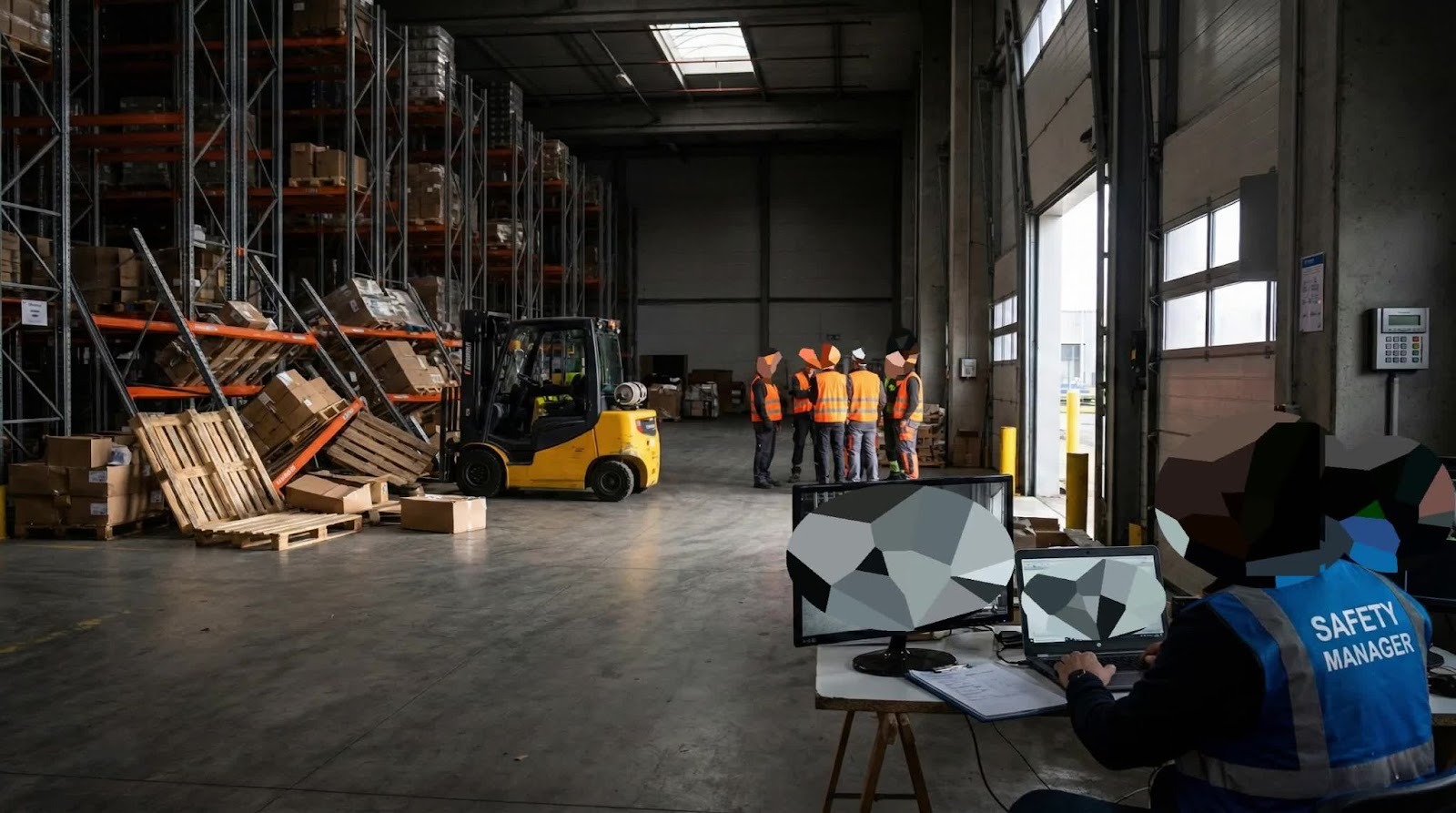
Let’s explore the critical role of video redaction in workplace incident management. We will move beyond the basics of "blurring faces" to understand the legal nuances, the specific workflows for OSHA and insurance compliance, and how Artificial Intelligence (AI) is transforming a once-tedious manual process into a fast, automated standard for safety operations.
The "Evidence vs. Privacy" Dilemma
The core challenge safety directors face today is a conflict of interest between two absolute necessities: Transparency and Privacy.
On one hand, you need transparency. To prove to an insurance carrier that your forklift driver was not at fault that the racking system failed due to a manufacturing defect, for example, you need crystal clear video evidence. You need to show the exact moment of impact. You need to show the speed of the vehicle. You need to show that the driver was wearing their high-visibility vest and following protocol.
On the other hand, you are bound by privacy obligations. The video that proves your driver's innocence also happens to show three other employees in the background having a coffee break. It shows a contractor signing in at a security desk, with their ID badge clearly visible in 4K resolution. It shows the face of the injured party in a moment of vulnerability and pain.
The Cost of Ignoring Privacy
If you simply export the raw file and send it out, you are rolling the dice. The consequences of sharing unredacted footage can be severe and multifaceted:
- Legal Liability (GDPR, CCPA, & BIPA):
Privacy laws are no longer limited to consumer data on websites. They extend to biometric data, which includes facial geometry captured on CCTV.
- GDPR (Europe/Global): If you have operations in the EU, or if you handle data of EU citizens, a face on a CCTV camera is considered "Personal Data." Processing or sharing that data without a lawful basis (and often without sanitization) can lead to massive fines up to 4% of global turnover.
- CCPA/CPRA (California): Similar to GDPR, California's privacy laws give employees rights regarding their personal information.
- BIPA (Illinois): The Biometric Information Privacy Act is particularly dangerous for companies using modern cameras. If your system identifies people, and you share that data without consent, you can face class-action lawsuits.
- GDPR (Europe/Global): If you have operations in the EU, or if you handle data of EU citizens, a face on a CCTV camera is considered "Personal Data." Processing or sharing that data without a lawful basis (and often without sanitization) can lead to massive fines up to 4% of global turnover.
- Reputational Damage & "The Viral Leak":
We live in a digital ecosystem where video files are easily copied and shared. A video sent to an insurance adjuster via a secure link can still be downloaded, saved to a desktop, and accidentally forwarded.
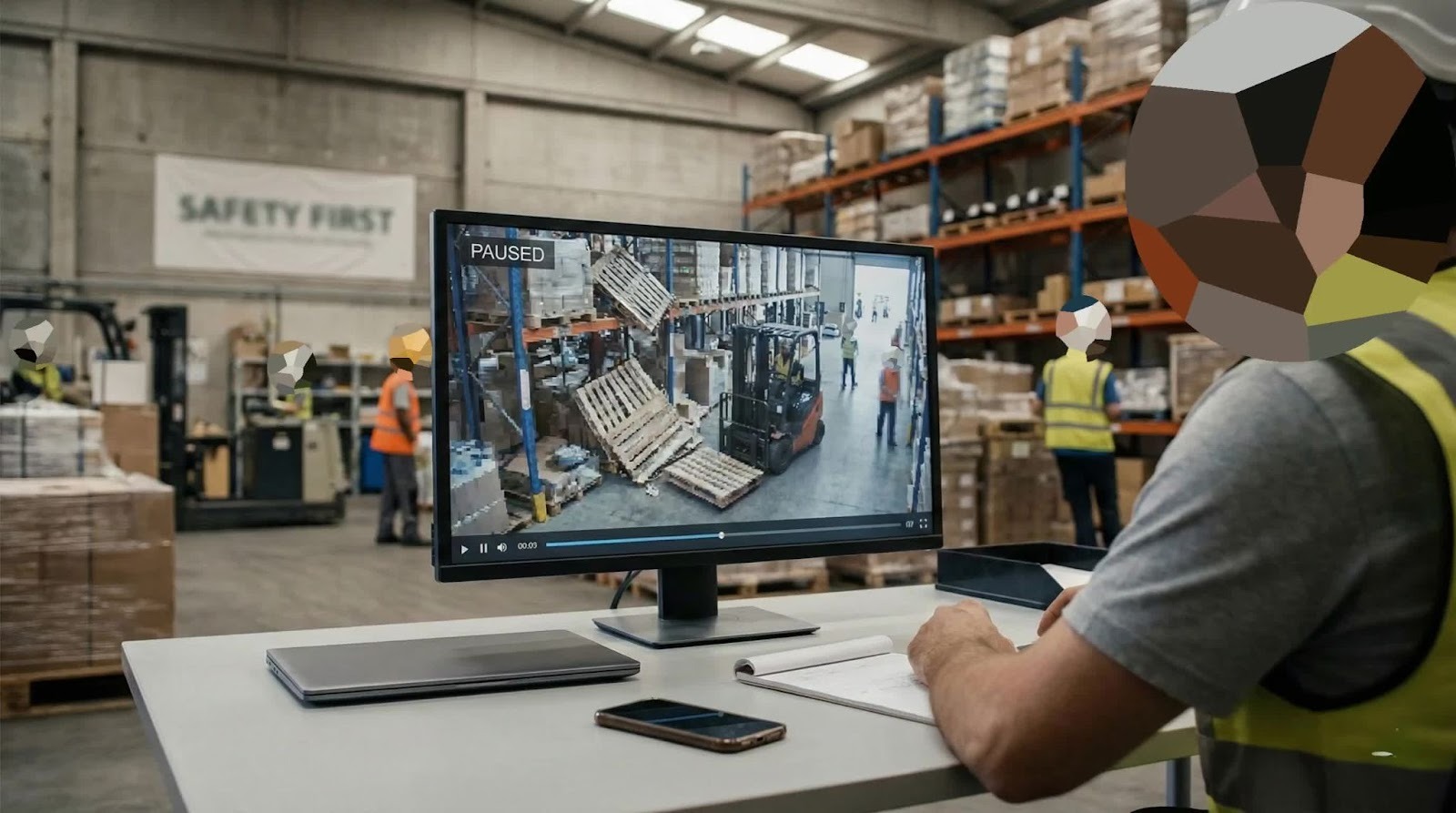
Consider the scenario of a warehouse collapse. If raw footage leaks to TikTok or Reddit, the public commentary will not be about your insurance claim; it will be about the terrified faces of your workers. That narrative is impossible to control once it starts. Redacting the faces of everyone involved including the injured removes the "human spectacle" element, keeping the focus on the machinery and the safety facts.
- Loss of Employee Trust:
Safety culture relies on trust. Employees need to know that cameras are there for their protection, not for their exploitation. If workers see that management carelessly shares video of their colleagues being injured or embarrassed, morale plummets. They may become resistant to cooperating with investigations or may even sabotage camera equipment. Demonstrating that you take pains to redact their identities before sharing footage builds trust. It shows you care about their dignity, not just the liability waiver.
Critical Use Cases for Redacted Footage
Redaction is not a one-size-fits-all process. The way you sanitize a video depends entirely on who is going to see it. In the industrial sector, there are three primary "consumers" of incident video, each with different requirements.
1. Regulatory Reporting (OSHA & HSE)
When a serious injury occurs, reporting to OSHA (in the US) or the HSE (in the UK) is mandatory. These investigations are thorough. Inspectors will demand evidence to determine if the accident was caused by negligence, equipment failure, or unavoidable circumstances.
- The Goal: Prove compliance. You want to show that the site was clean, signage was visible, and protocols were followed.
- The Redaction Strategy:
In this context, you often need to keep the actions visible but obscure the identities. You might redact the faces of all bystanders to protect them from being dragged into the investigation as witnesses unless necessary. However, you must be careful not to over-redact; obscuring the hands of the operator or the controls of the machine would destroy the evidence.
- Tip: Use Targeted Redaction. Blur faces, but leave bodies and hands visible so inspectors can analyze body mechanics and PPE usage.
2. Insurance Claims & Liability Defense
Insurance claims are a numbers game. The faster you provide evidence, the faster the claim is processed. The clearer the evidence, the less "wiggle room" there is for dispute.
- The Goal: Speed and clarity.
- The Redaction Strategy: Insurers need to see the cause of the accident. However, your legal team will likely advise against sending them any data that isn't relevant to the claim. This includes "collateral data."
- Scenario: A delivery truck backs into your loading bay door. The camera captures the truck's license plate (vital evidence) but also captures the license plates of five other employee cars in the parking lot and a view of a prototype product on a pallet nearby.
- The Fix: Selective Redaction. You leave the offending truck's plate visible. You blur the employee cars (privacy) and you heavily blur the prototype pallet (commercial secret). You submit a video that proves the truck hit the door, and nothing else.
- Scenario: A delivery truck backs into your loading bay door. The camera captures the truck's license plate (vital evidence) but also captures the license plates of five other employee cars in the parking lot and a view of a prototype product on a pallet nearby.
Essential Features for Industrial Redaction
If you have ever tried to redact a video using standard video editing software (like Adobe Premiere or even simple free tools), you know it is a nightmare. You have to manually draw a circle over a face, move forward a few frames, move the circle, move forward, and repeat. For a 5-minute clip of a busy warehouse, this can take hours or even days.
Industrial environments are too dynamic for manual editing. You need AI-Powered Redaction. Here are the specific features that transform this workflow from a chore into a simple task.
1. Intelligent Object Detection
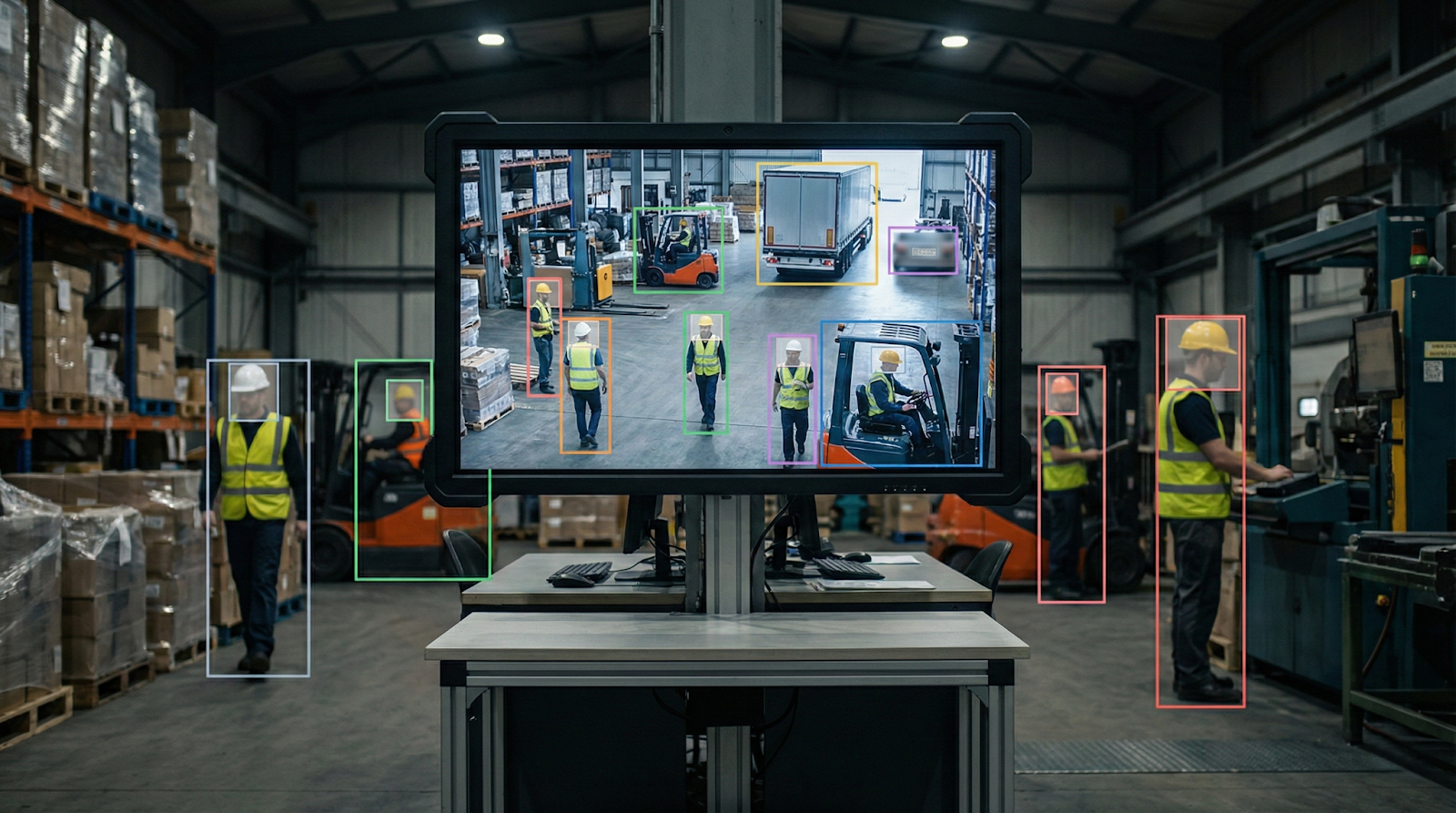
The foundation of modern redaction is Computer Vision. Instead of you telling the software "put a blur here," the software looks at the video and tells you "I see 5 people, 2 cars, and 3 license plates."
- Heads/Faces: The AI detects faces even when they are partially obscured, turned away, or wearing hard hats and safety glasses.
- Vehicles: It identifies cars, trucks, and forklifts as distinct objects.
- License Plates: Specialized OCR (Optical Character Recognition) engines find license plates even on moving vehicles and offer to blur them automatically
2. Object Tracking
In a warehouse, people move. They walk behind pillars, they climb onto machinery, they turn their backs. Manual editing fails here because you lose track of the subject.
Sighthound Redactor utilizes advanced tracking algorithms. Once the AI identifies "Person A," it assigns them a unique ID. As Person A walks across the warehouse floor, the blur "sticks" to them.
- Occlusion Handling: If Person A walks behind a stack of pallets and re-emerges 3 seconds later, the AI is smart enough (in many cases) to re-acquire them or allows you to easily link the two tracks. This assure there isn't a single frame where the face is accidentally revealed.
3. The "Invert Selection" Advantage
This is the "secret weapon" for workplace accident investigations. Most people think of redaction as "hiding the bad stuff." In an investigation, you often want to do the opposite: highlight the subject and hide the world.
- The Workflow: Imagine a chaotic scene with 20 workers. You only care about the one driver involved in the crash. Instead of clicking 19 people to blur them, you select the driver and click "Invert Selection."
- The Result: The software automatically keeps the driver clear (or blurs them, depending on your goal) and applies a heavy blur to the entire background and every other person.
- Why it Matters: This creates a laser-focused evidence clip. There is zero distraction. The viewer cannot look at the bystanders; they can only look at the machinery involved. It is the gold standard for submitting evidence to external parties where you want to limit liability exposure to the absolute minimum.
4. Metadata Sanitization
Redaction isn't just visual. Modern video files (especially from drones or smart body cams) contain hidden metadata: GPS coordinates, timestamps, camera serial numbers, and audio tracks.
- Audio Redaction: Often, the audio is more sensitive than the video. A microphone might pick up an injured worker screaming in pain, or managers discussing sensitive protocols post-incident. A strong redaction tool allows you to easily mute or "beep out" audio segments independent of the video blur.
- EXIF/Metadata Scrubbing: Secure your software strips this hidden data upon export so you don't accidentally reveal the exact GPS location of a secret facility.
Best Practices for Reviewing Incident Video
Implementing software is only half the battle. You need a process. Here are the best practices for Safety Directors managing video evidence.
1. The "Compliance-First" Review Protocol
Never export a video without a "four-eyes" check if it is going to court.
- First Pass (AI): Let the AI do the heavy lifting (90% of the work).
- Second Pass (Human): A human reviewer must watch the critical moments to insure the AI didn't miss a reflection in a mirror or a face visible through a truck window.
- Third Pass (Legal): For high-stakes claims, legal counsel should review the redacted clip to make sure no prejudicial information remains.
2. Audit Trails and Chain of Custody
In a legal setting, who redacted the video is as important as what was redacted.
- Use software that maintains an Audit Log. You need to be able to prove: "User John Doe accessed this file on Tuesday at 2 PM, applied a blur to 'Person A', and exported it."
- This protects you against accusations of "tampering." You can prove that you only redacted privacy elements and did not alter the timeline or the events of the accident itself.
3. Data Minimization (The "Snippet" Rule)
Do not redact and send an hour of footage if the accident took 30 seconds.
- Trim First: Cut the clip to the relevant timeframe (e.g., 1 minute before, 1 minute after).
- Redact Second: Process only that 2-minute clip.
- This reduces processing time, reduces file size, and reduces the risk of accidentally including something irrelevant in the footage.
Industry Deep Dive: Challenges by Sector
While the principles are similar, the challenges of redaction vary significantly by industry.
Construction: The Moving Target
Construction sites are constantly changing. A camera that looked at a wall yesterday might look at a busy street today.
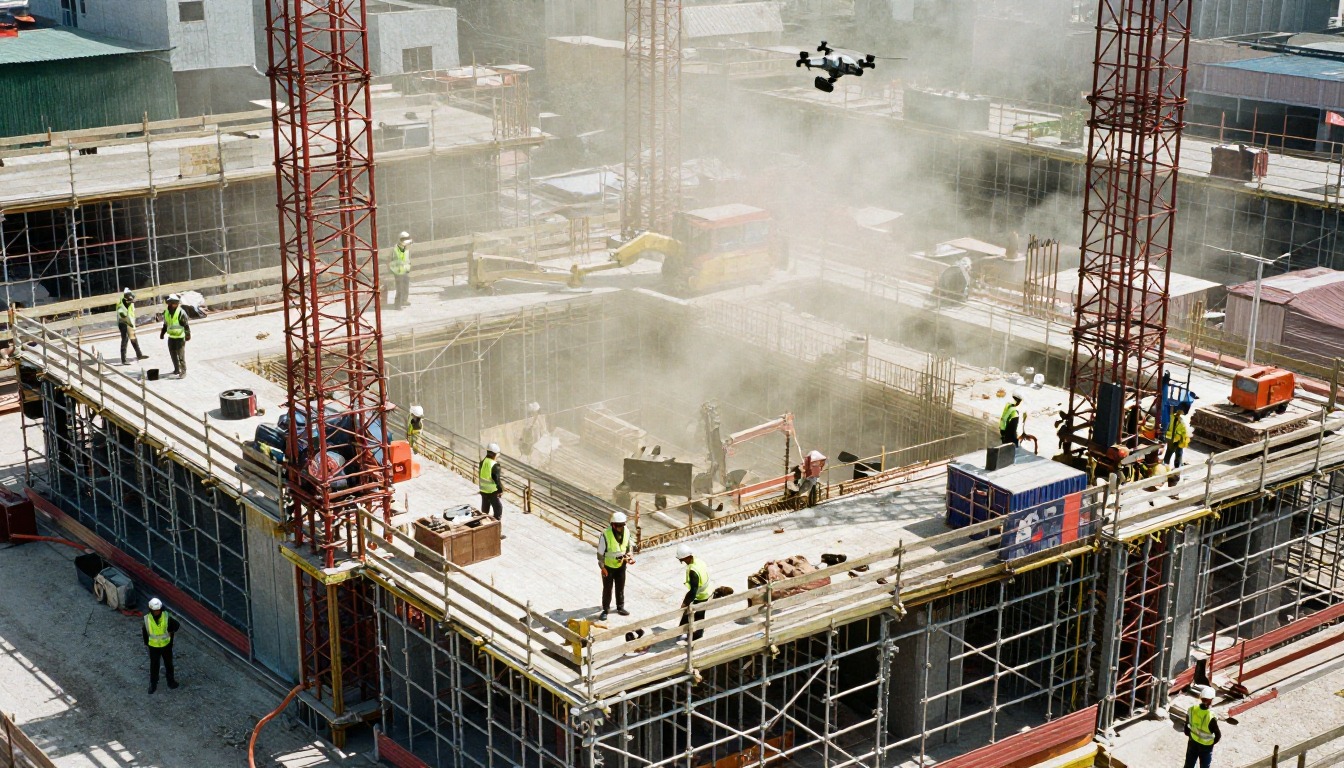
- The Challenge: High-Vis Vests and chaotic backgrounds. Construction sites are visual noise. Standard AI often struggles to distinguish a worker in a yellow vest from a yellow generator.
- The Solution: Sighthound’s specialized engines are trained on diverse environments, improving detection of workers even in complex, cluttered, and dusty construction zones.
- Drone Footage: Construction sites increasingly use drones for progress monitoring. These drones fly over public streets, capturing hundreds of license plates and pedestrians. Redacting 4K drone footage manually is impossible. AI batch processing is the only viable solution here.
Warehousing: The Low-Light Labyrinth
Warehouses are often dimly lit, with high-contrast areas (bright open dock doors vs. dark aisles).
- The Challenge: Motion Blur and Occlusion. Forklifts move fast. In low light, a fast-moving face becomes a blur. Standard detection might miss it.
- The Solution: Adjusting Confidence Thresholds. In a professional tool, you can tell the AI, "I want you to be extra sensitive." You might get a few more false positives (blurring a box that looks like a head), but you insure you catch the motion-blurred face of the driver.
- Theft Investigations: Warehouses deal with internal shrinkage. When investigating theft, you often need to share video with the police. Redacting the innocent workers on the line while revealing the suspect is a delicate and necessary task.
Logistics & Fleet: The Mobile Witness
Dashcams (driver-facing and road-facing) are standard in logistics fleets.
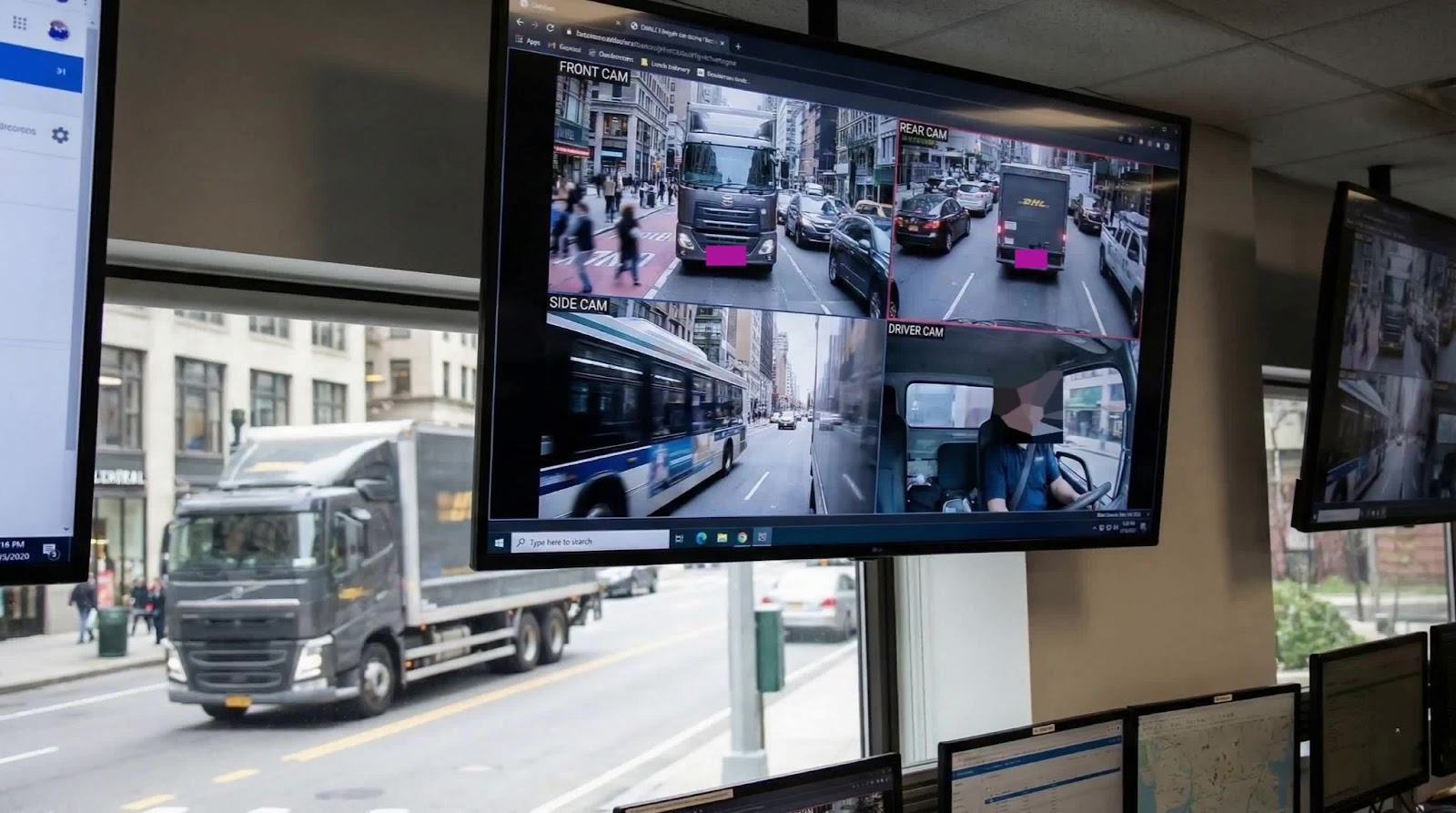
- The Challenge: Public Data at Scale. A delivery truck driving through a city records thousands of people and cars every hour. If you need to pull footage to prove a delivery was made, you strictly cannot share the footage of the public.
- The Solution: Bulk Redaction. If you have a fleet incident, you often have 4 or 5 different camera angles (front, back, left, right, driver). You need a solution that can ingest all 5 angles and process them simultaneously, ensuring consistent redaction across the entire "incident event."
Conclusion: Don't Wait for the Accident
The worst time to figure out your video privacy strategy is ten minutes after a major accident, when the CEO is on the phone and the insurance adjuster is demanding files.
By that point, the stress is too high. Mistakes will be made. You will either send raw footage and risk a lawsuit, or you will delay the investigation by days while someone tries to manually blur faces in Microsoft Paint.
Redaction is a proactive safety tool. It should be part of your standard Incident Response Plan (IRP).
The growth of video data continues. Cameras are higher definition, storage is cheaper, and the public demand for answers is louder.
Using Sighthound Redactor with an API-based architecture grows fast, consistently, and cost-effectively.
Key Features & Benefits
- Fully automated video & image Redaction – Redactor automatically blurs heads, vehicles, and license plates, documents, ID cards, and digital screens (laptops, phones) protecting privacy while keeping footage usable for security teams.
- On-Device AI Processing – All video is processed locally on edge cameras, avoiding cloud uploads and reducing data breach risks, ideal for compliance with GDPR, FERPA, CCPA, and COPPA.
- Easy Integration – Works with most existing camera systems, with a robust API and customizable presets, making deployment quick, affordable, and disruption-free.
- Edge & Cloud Deployment – Run redaction on-premises for security-critical environments or in the cloud for maximum efficiency.
- Inverse Redaction – Allows you to keep a specific subject visible while automatically blurring the entire background ideal for public transparency and focusing on key evidence.
- Forensic Audit Trails – Secures the chain of custody with cryptographic hashing and detailed logs of every edit and user action, ensuring the footage remains court-admissible.
- Smart Audio Redaction Syncs multi-language transcription with the timeline, letting users search for keywords and instantly redact audio via mute, beep, or scramble.
Want to learn more about AI-powered redaction & digital content compliance? Try Sighthound Redactor today.
Want more insights? Read our AI-powered redaction best practices. Need a live demo? Schedule a Redactor demo now.
FAQs
While OSHA requires video evidence, submitting raw footage can violate privacy laws like GDPR and BIPA. The best practice is targeted redaction: blur bystander faces while keeping the injured party and machinery visible.
Insurance adjusters need facts, not distractions. AI-powered redaction removes unrelated employees and proprietary data, allowing faster claim validation.
Manual editing is slow and error-prone. AI redaction automatically detects and tracks moving objects, turning hours of work into minutes.
Yes. Professional tools allow confidence threshold adjustments so faces are detected even in dim or dusty environments.
Published on: