%2520(4).png)

By:
Ali AhadLast Updated:
TL;DR
We operate in a time of constant recording. From body-worn cameras (BWCs) on law enforcement officers to dashcams in logistics fleets and CCTV networks in cities, the quantity of video data grows every hour. Industry reports suggest that the total of video surveillance data stored globally is rising rapidly, with petabytes of footage generated every 24 hours.
For teams managing this data, the issue is not just storage. The main problem is privacy. Every second of footage recorded in a public place likely contains Personally Identifiable Information (PII). This includes faces of bystanders, license plates, private conversations, and sensitive documents on screens.
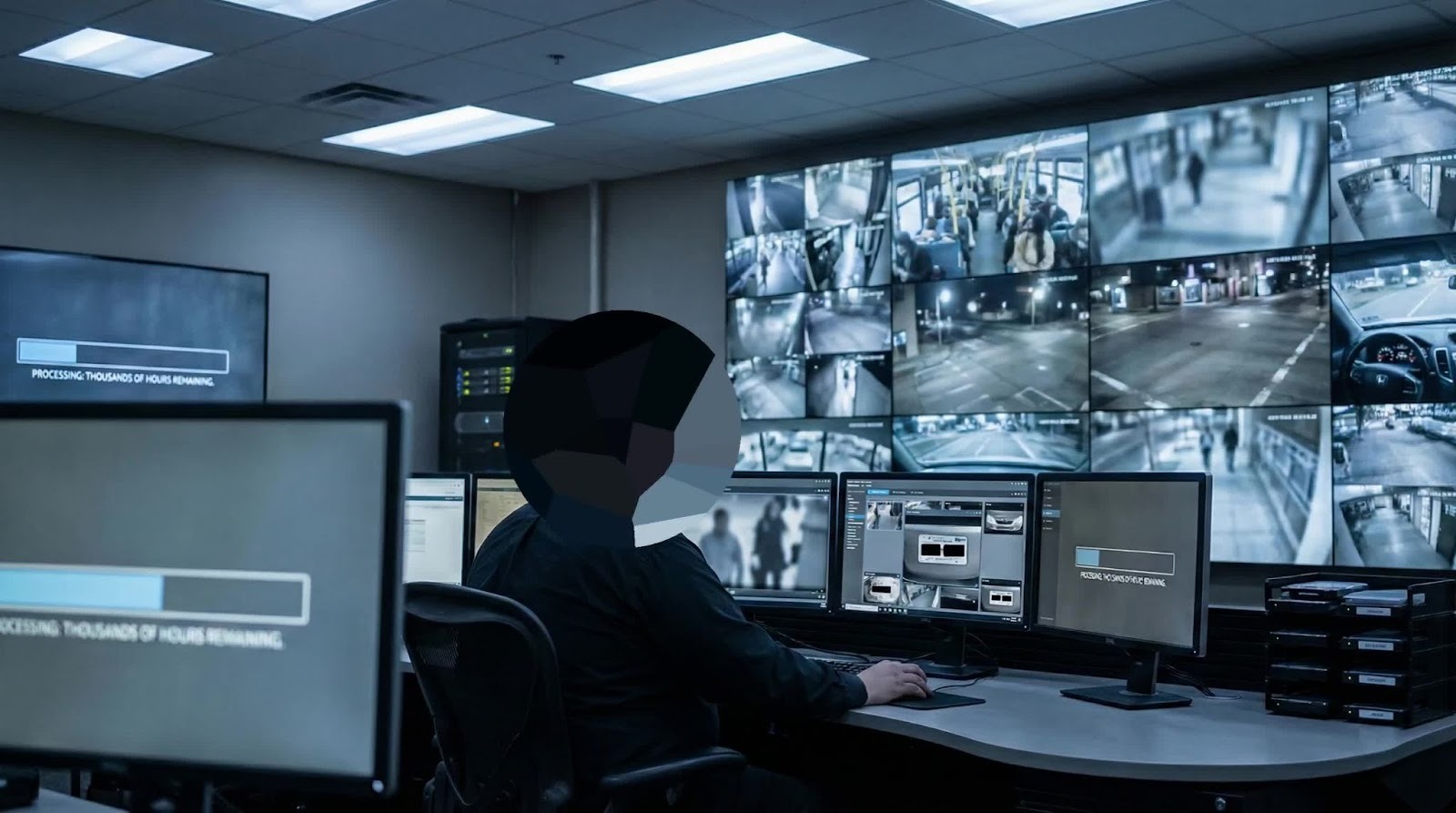
When a Freedom of Information Act (FOIA) request arrives, or a Subject Access Request (SAR) under GDPR is filed, agencies must release that footage. However, they must first scrub it of all sensitive third-party data.
In a small shop dealing with one incident a month, manual editing works. A staff member can draw a box around a face and export the clip. But consider a city transit authority that needs to release 4,000 hours of bus surveillance footage for a legal case. Or a police department that receives 50 FOIA requests in a week, each requiring the review of terabytes of bodycam video.
The manual model fails here. It creates a bottleneck that drains budgets, exhausts staff, and leads to missed legal deadlines.
The only practical answer for these environments is computerized processing. By moving from pixel-by-pixel manual editing to algorithmic pipelines, organizations can handle thousands of hours of footage quickly. This guide looks at how Sighthound Redactor helps with this shift, turning a backlog into a compliant workflow.
The Data Overflow in Digital Evidence
To understand why we need machines to do this work, we must look at the math. Manual redaction is historically a 1 to 1 process, or often worse. For every one hour of video, a human editor might spend two or three hours reviewing, tracking, and verifying.
Consider a mid-sized law enforcement agency with 500 officers. If each officer records just 2 hours of interaction per shift, that is 1,000 hours of new footage every day. Even if only 5% of that footage is requested for public release or court evidence, that is 50 hours of video requiring work daily.
Using the 2 to 1 ratio, the agency would need 100 man-hours per day just to keep up. That equals 12 full-time employees doing nothing but clicking boxes on a screen.
The Hidden Costs of the Backlog
When incoming requests exceed processing speed, a backlog forms. In large environments, backlogs are a major risk.
- Legal Sanctions: Missing a court-ordered deadline for evidence submission can result in dismissed cases.
- Financial Penalties. Under rules like GDPR, failure to respond to a request within 30 days can result in fines.
- Public Trust: In the public sector, delays in releasing footage of critical incidents can damage community trust.

Moving From Manual Clicking to Computer Vision
The answer to the volume problem is not hiring more people. It is using better tools. Sighthound Redactor uses deep learning neural networks (DNN) to change the workflow. Instead of a human operator telling the software where a face is, the software tells the operator.
The Power of Computer Vision First
Standard video editing software treats video as pixels. Sighthound Redactor treats videos as objects. Its neural networks recognize specific patterns that make up a human head, a vehicle, or a license plate.
When we discuss high-speed processing in Redactor, we refer to Detection Modes. These are engines you can turn on or off depending on the need.
1 Face and Head Detection
This is a common requirement. Basic tools often struggle with side profiles or people looking away. Sighthound’s model detects the head as a 3D object, not just facial features. This means even if a subject turns around, the blur mask stays locked onto them.
2 License Plate Detection
For Department of Transportation (DOT) agencies or fleet managers, license plates are the main source of PII. Tracking moving cars by hand is hard because vehicles speed up, turn, and pass behind objects. Sighthound’s License Plate Mode identifies the rectangular shape and text patterns of plates, applying a blur instantly across the video timeline.
3 Vehicle and People Detection
In some undercover operations, it is not enough to blur the face. You must obscure the whole identity.
- People Mode detects the full human form (torso, limbs) to protect identity based on gait or clothing.
- Vehicle Mode identifies the car itself. This matters when the make and model of a vehicle could reveal the identity of a witness or officer.
4 Audio Processing
Video is only half the picture. Audio tracks often contain names, addresses, social security numbers, and medical information spoken aloud. Redactor handles this through Audio Processing.
- The system transcribes the audio track into text.
- Users (or scripts) can search for specific words (e.g., "Main Street," "John Doe").
- The system mutes or "beeps" the audio at the exact timestamps where those words appear.
Hybrid Workflows for Quality Control
Using algorithms does not always mean zero human involvement. In complex scenarios such as a crowded protest where you need to redact 500 faces but keep one suspect visible, a Hybrid Workflow works best.
- Run the Batch. The user or API triggers a "Redact All Faces" pass. The system processes the hour-long video in minutes.
- Human Review: The operator opens the file. Most of the work is done. They simply find the one suspect, right-click their track, and select "Un-Redact."
- Export: The job finishes in 5 minutes instead of 5 hours.
The Headless Workflow: How APIs Scale Redaction
For the enterprise architect or government CTO, the goal is to remove the Graphical User Interface (GUI). If you have 10,000 files to process, you cannot open an application window for each one.
You need Headless Processing.
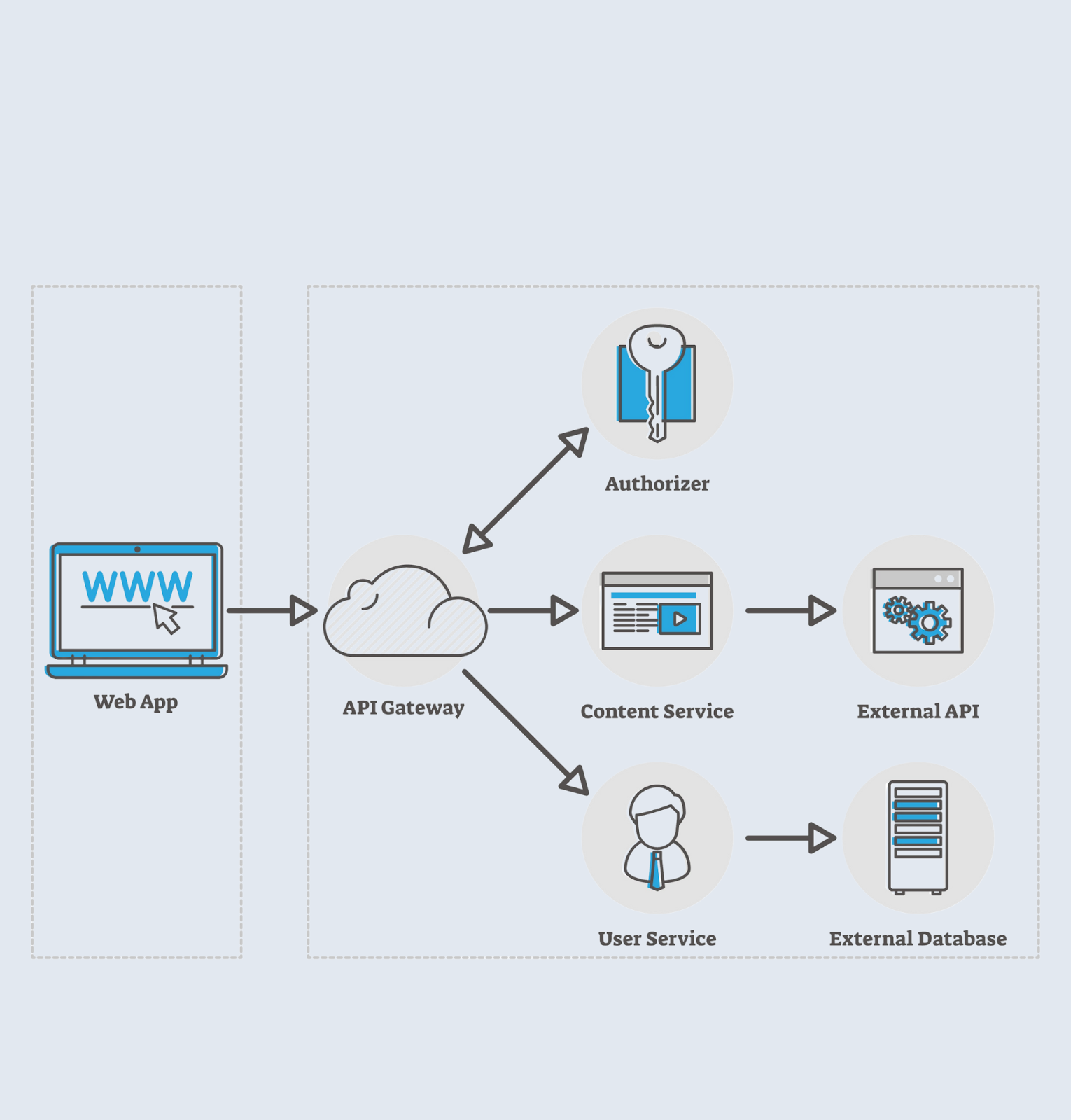
Sighthound Redactor provides a REST API that allows your current infrastructure to speak directly to the Redactor engine. This lets you create pipelines where video redaction happens in the background, like file compression or data backup.
The Architecture of a Batch Pipeline
How does a headless workflow look? It typically follows an "Ingest, Process, Export" pattern, often using Cloud Storage (like AWS S3, Azure Blob) or local network drives.
- Ingest (The Watch Folder)
Your Evidence Management System (EMS) or a script monitors a specific folder. As soon as officers upload their bodycam footage, the files land here. - Trigger (The API Call)
Your system sees the new file and sends a POST request to the Sighthound Redactor API. This JSON payload contains the instructions:- Source File case-102.mp4
- Instructions: "Run Face Detection and License Plate Detection"
- Style "Mosaic Blur, High Intensity"
- Output Destination s3://agency-evidence-public/
- Process (The Black Box)
Sighthound Redactor receives the command. It pulls the video, runs the models, and applies the blurs. This happens on a server, perhaps overnight, without any human needing to log in. - Export
Once finished, Redactor pushes the clean video to the output folder. This is necessary for legal defense.
Why Infrastructure Matters: Docker and GPUs
When processing large amounts of video, software speed is only half the battle. The other half is hardware use. Sighthound Redactor is built to get the most performance out of modern infrastructure.
Containerization with Docker
In a standard software model, you install an .exe file on a single computer. If that computer reaches its limit, your workflow stops.
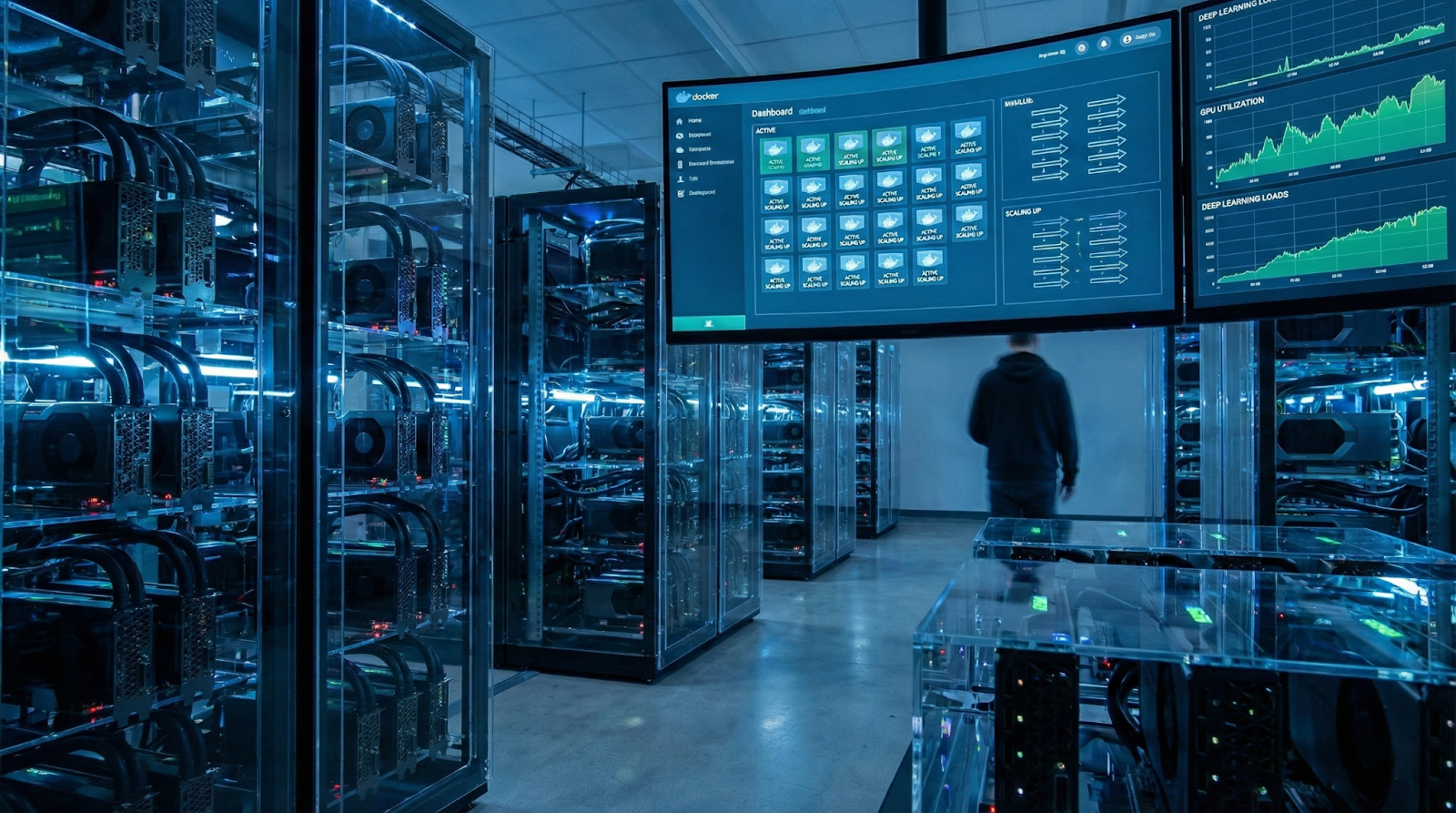
Sighthound Redactor supports Docker Containers. This helps with volume.
- Elasticity: If your agency has a quiet week, you might run 2 containers. If a major riot occurs and you ingest 5,000 hours of footage overnight, you can start 50 containers to handle the load at once.
- Resource Isolation: Each container runs on its own. If one file is corrupt, it does not crash the system. The other 49 containers continue working.
GPU Acceleration for Speed
Deep Learning models involve heavy math. Running them on a standard computer CPU is slow.
Sighthound Redactor works with NVIDIA GPUs using CUDA technology.
- Throughput A GPU-based instance can process video much faster than real-time. This means a 1-hour video might be fully analyzed and redacted in 10 to 15 minutes.
- Cost Savings While GPUs cost more upfront, the speed they offer means you need fewer servers to handle the same work, lowering the total cost of ownership.
On-Premise vs Cloud Security Choices
Many solutions require you to upload your sensitive evidence to public cloud servers. For law enforcement and healthcare, this is often impossible due to security policies (CJIS, HIPAA).
Sighthound offers deployment flexibility.
- Air-Gapped / On-Premise You can run the Docker containers on your own physical servers, disconnected from the internet. The data never leaves your building.
- Private Cloud Deploy in your own AWS GovCloud or Azure Government instance. You get the benefits of the cloud without the risk of a multi-tenant public SaaS.
Making Certain of Compliance at Scale
Some leaders worry about errors when machines do the work. "If I don't look at it, how do I know it is safe?"
In large environments, using code actually improves consistency compared to manual work.
Reducing Human Error
Human attention spans drop quickly. After 20 minutes of watching bodycam footage, an operator's ability to spot a face in the background falls.
Algorithms do not get tired. They do not get distracted. They apply the same strict detection standard to the first minute of video as they do to the last.
Chain of Custody and Metadata
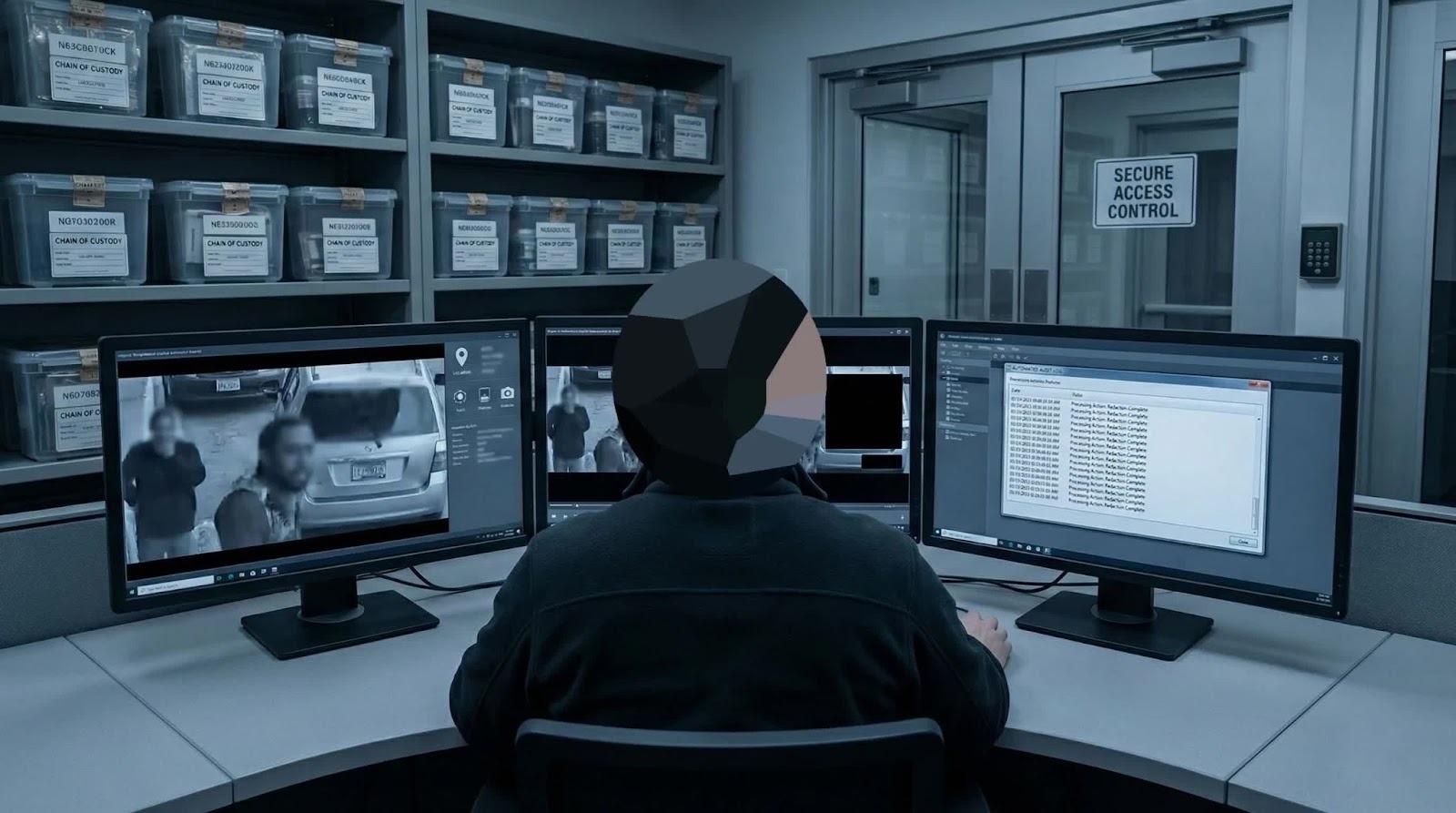
When a file goes through the Sighthound API, the system keeps the evidence integrity intact.
- Non-Destructive: The original file is never changed. Redactor creates a new file version.
- Metadata Scrubbing Redactor can remove hidden metadata (GPS coordinates, camera serial numbers) that might reveal sensitive info.
Meeting Global Standards
- GDPR Specifically the "Right to be Forgotten." If an individual asks for their data to be removed, programmatic tools can scan vast archives to locate and redact it.
- FOIA Batch processing allows agencies to meet strict deadlines for releasing information, avoiding lawsuits.
- Docker container The ability to deploy on-premise allows agencies to follow FBI security policies regarding digital evidence.
Conclusion: The Value of Programmatic Privacy
The growth of video data continues. Cameras are higher definition, storage is cheaper, and the public demand for answers is louder.
For organizations in this reality, the choice is simple. Use machines or fall behind.
Sticking to manual workflows brings diminishing returns. It grows linearly with headcount, is expensive and slow.
Using Sighthound Redactor with an API-based architecture grows fast, consistently, and cost-effectively.
Key Features & Benefits
- Fully automated video & image Redaction – Redactor automatically blurs heads, vehicles, and license plates, protecting student privacy while keeping footage usable for security teams.
- On-Device AI Processing – All video is processed locally on edge cameras, avoiding cloud uploads and reducing data breach risks, ideal for compliance with GDPR, FERPA, CCPA, and COPPA.
- Real-Time Threat Detection – Sighthound edge devices analyse video instantly to detect threats like unauthorised entry or suspicious behaviour, enabling faster response.
- Easy Integration – Works with most existing camera systems, with a robust API and customizable presets, making deployment quick, affordable, and disruption-free.
- Edge & Cloud Deployment – Run redaction on-premises for security-critical environments or in the cloud for maximum efficiency.
Want to learn more about AI-powered redaction & digital content compliance? Try Sighthound Redactor today.
Want more insights? Read our AI-powered redaction best practices.Need a live demo? Schedule a Redactor demo now.
Published on: