

By:
Haris RanaLast Updated:
TL;DR
Casinos deploy thousands of cameras to deter theft, comply with gaming laws and document every wager. That comprehensive coverage also captures personal data: faces, player IDs, text messages, banking details and conversations, that must be stored and disclosed on demand. Regulators require casinos to retain footage for days or even years. At the same time, privacy laws such as GDPR and CCPA insist on data minimisation, lawful justification, clear signage and retention limits. When surveillance systems collect “too much,” casinos face legal risk, operational bottlenecks and reputational damage. Automated video redaction, strict retention policies and transparent workflows help them balance security, compliance and privacy.
Disclaimer: This material is for general informational purposes and does not constitute legal advice. Readers should consult qualified counsel to determine how privacy and gaming regulations apply to their own circumstances.
Key takeaways
- Gaming commissions require non‑restricted licensees to monitor slots, tables, cash cages and count rooms continuously and keep recordings for at least 7–45 days. U.S. anti‑money‑laundering rules also compel casinos to keep transaction and gaming logs for five years.
- High‑resolution pan‑tilt‑zoom cameras can zoom in on patrons’ phones; a Canadian judge ruled that using casino cameras to read a suspect’s text messages amounted to an unlawful interception and violated privacy rights. Over‑collection risks similar claims under GDPR, CCPA and wiretap laws.
- The European Data Protection Supervisor notes that surveillance should target specific security problems and avoid capturing irrelevant footage; UK guidance requires a lawful basis, adequate and limited data, and secure storage. GDPR and CCPA mandate clear signage, retention limits and the ability for individuals to access or delete their footage.
- With thousands of cameras, casinos generate enormous amounts of footage; manually redacting a few minutes can take hours. CaseGuard notes that enhanced surveillance creates a significant operational burden and that automated redaction cuts days of work down to minutes.
- AI‑driven redaction software automatically identifies and obscures faces, license plates, screens and documents, helping casinos comply with privacy laws and respond quickly to subpoenas or consumer requests.
- Casinos operate like financial institutions and must satisfy the U.S. Bank Secrecy Act, GDPR, CCPA and other regional laws; failing to implement proper data governance can lead to fines, license loss and customer distrust.
Why do casinos record so much, and what exactly gets captured?
Casinos are among the most heavily monitored commercial environments. Nevada’s Surveillance Standards require non‑restricted gaming licensees to provide continuous video coverage of slot machines, table games, cages, count rooms and other sensitive areas, and to store the recordings for at least seven days. Gaming salons must retain recordings for 45 days and make them available to regulators on request. These rules exist to protect the integrity of gaming, deter cheating and support investigations into theft or money‑laundering.
The Bank Secrecy Act treats casinos like financial institutions: they must file reports on currency transactions over $10,000 and suspicious activities and retain gaming records and transaction logs for five years. To comply, casinos capture and archive footage of every wager, payout and cage transaction. Modern casino surveillance systems also integrate facial recognition to identify banned players or VIPs, track players’ movements and personalise rewards.

Comprehensive coverage, however, means that cameras inevitably record more than chips and cards. High‑definition pan‑tilt‑zoom cameras mounted above tables can read the text on a player’s smartphone, pick up credit card numbers at cashier windows or capture private conversations. CaseGuard notes that casinos deploy thousands of CCTV cameras across all entrances, gaming floors, cashiers, and open areas, generating vast quantities of video that may include faces, loyalty‑card IDs, license plates and personal documents.
When does “enough” become “too much”?
The line between necessary surveillance and over‑collection is blurry. In a 2014 case, Vancouver police asked casino surveillance staff to zoom PTZ cameras on a suspect’s smartphone and capture his text messages; a Canadian judge later ruled that this amounted to intercepting communications without a wiretap authorization. A separate analysis observed that the court recognised a gambler’s reasonable expectation of privacy over texts even in a casino, despite signage warning of surveillance.

The European Data Protection Supervisor warns that poorly designed surveillance systems can intrude on privacy while creating a false sense of security; they recommend targeting cameras only at identified security problems and minimising irrelevant footage. Likewise, UK data protection guidance emphasises that footage must be adequate, relevant and limited to what is necessary. GDPR explicitly treats video recordings as personal data and requires businesses to justify why they record individuals, inform them via clear signage, and set retention limits, such as automatically deleting footage after 30 days.
Over‑collection risks violating privacy and wiretap laws. Zooming in to read messages or view banking details may be considered an interception of communications or an unauthorized collection of personal data. Beyond legal exposure, capturing too much also burdens storage, redaction and disclosure processes.
What laws and regulations govern casino surveillance and data retention?
Casinos must navigate a maze of gaming, financial and data‑protection laws. Under Nevada’s Surveillance Standards, licensees must operate dedicated surveillance rooms, restrict access to trained staff and record the date and time on all footage. They must also log system malfunctions and retain the logs for at least one year.
The Bank Secrecy Act requires casinos to maintain original or reproducible records of customer gaming activities and currency transactions for five years. Failing to obtain complete identifying information or retain logs can result in penalties and jeopardise a casino’s licence.
Privacy legislation adds another layer. GDPR defines video recordings as personal data and demands a lawful basis for processing, clear notice to individuals and data minimisation. It gives people the right to request access to or deletion of footage featuring them. The UK Information Commissioner’s Office (ICO) similarly instructs organisations to identify a lawful basis, limit data collection and determine retention periods based on purpose rather than convenience. The EDPS stresses timely and automatic deletion of footage and transparency about who stores it.
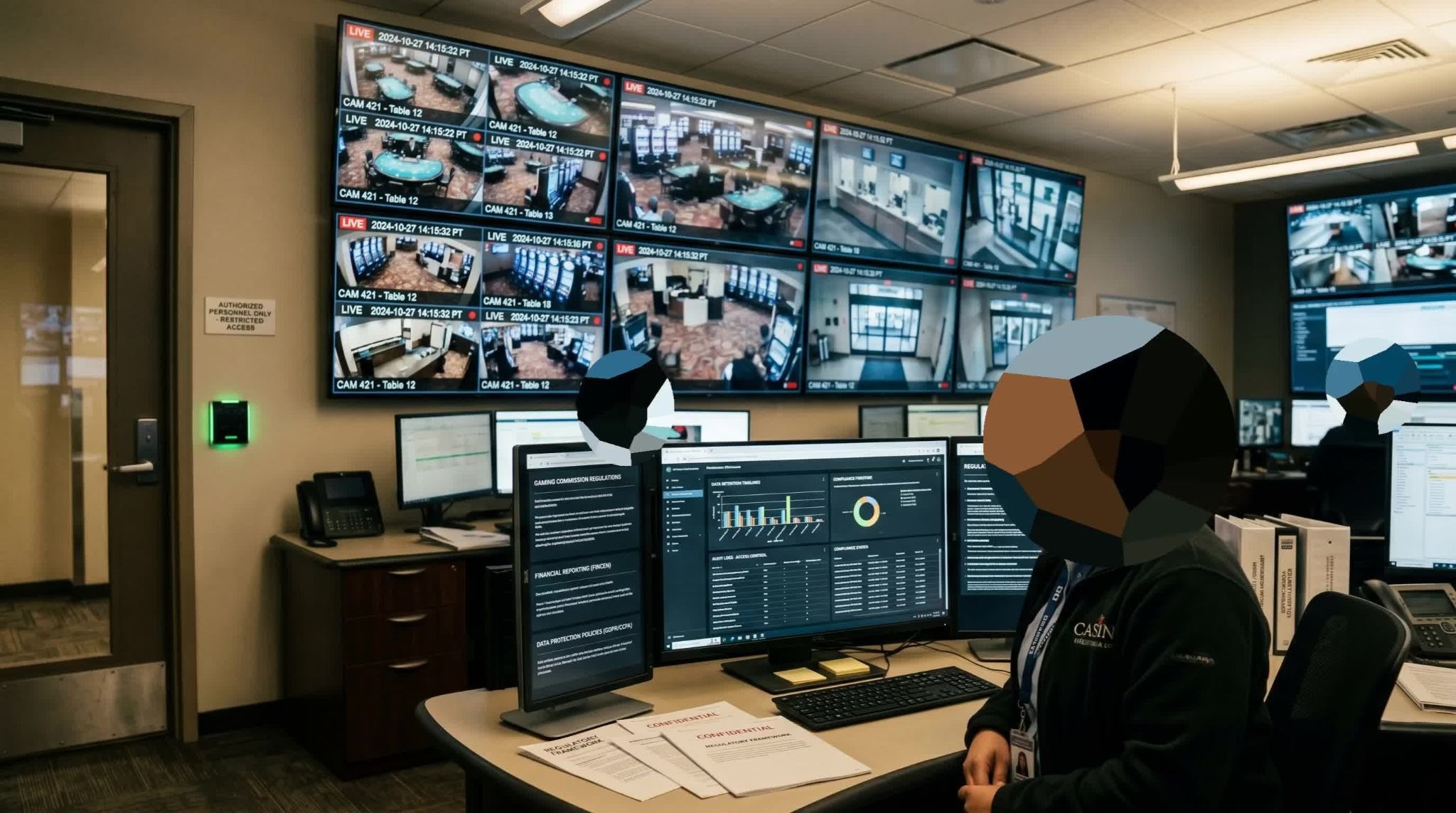
In the United States, the California Consumer Privacy Act (CCPA) grants residents the right to know what personal data businesses collect and to request deletion or opt out of data sharing; violations can trigger fines of $2,500 per unintentional breach and $7,500 per intentional breach. Because casinos serve travellers from multiple jurisdictions, they must often comply with several regional laws simultaneously.
How does over‑collection slow down casino operations?
Collecting every detail may feel safe, but it creates hidden costs. Thousands of cameras recording 24/7 produce petabytes of footage. When an incident occurs or regulators request footage, security teams must locate the relevant files, review them frame by frame and redact all faces, documents and screens before sharing.
A request comes in. It could be:
- A legal inquiry
- A regulatory audit
- A customer data request
- An internal investigation
Now the team has to:
- Find the right footage
- Review it manually
- Identify sensitive elements
- Remove or obscure them
- Deliver a clean version
This is where things slow down.
A short clip can take hours to process if done manually. Multiply that by dozens or hundreds of requests, and it becomes unsustainable.
Data retention adds further complexity. Nevada regulations require casinos to keep certain recordings for 7–45 days. The Bank Secrecy Act extends record retention to five years for some logs. GDPR and CCPA, in contrast, instruct businesses to keep footage only as long as necessary and to delete it automatically thereafter. Reconciling these requirements demands robust retention schedules and secure, scalable storage. Without automation, teams may struggle to tag and purge footage in time, risking non‑compliance.
How can casinos balance security, compliance and privacy?
Finding the sweet spot starts with purpose and policy. Security leaders should conduct privacy impact assessments to identify legitimate surveillance needs, justify each camera’s placement and configure cameras to avoid unnecessary capture. The EDPS recommends designing systems that minimise irrelevant footage, while UK guidance calls for data minimisation and secure storage.
Transparency is critical: casinos must post clear signage explaining that recording is taking place, why it is necessary, how long footage will be kept and how individuals can exercise their rights. Under GDPR and CCPA, patrons may request copies of recordings featuring them or ask for deletion. Compliance teams should implement procedures to search, retrieve and redact footage within statutory deadlines.
Retention schedules should align with both gaming and privacy obligations. Recordings needed for gaming compliance may be archived for the required 7–45 days or longer, while incidental footage should be purged sooner. Documenting retention rules and automating deletion reduces the risk of accidental over‑retention or premature destruction.
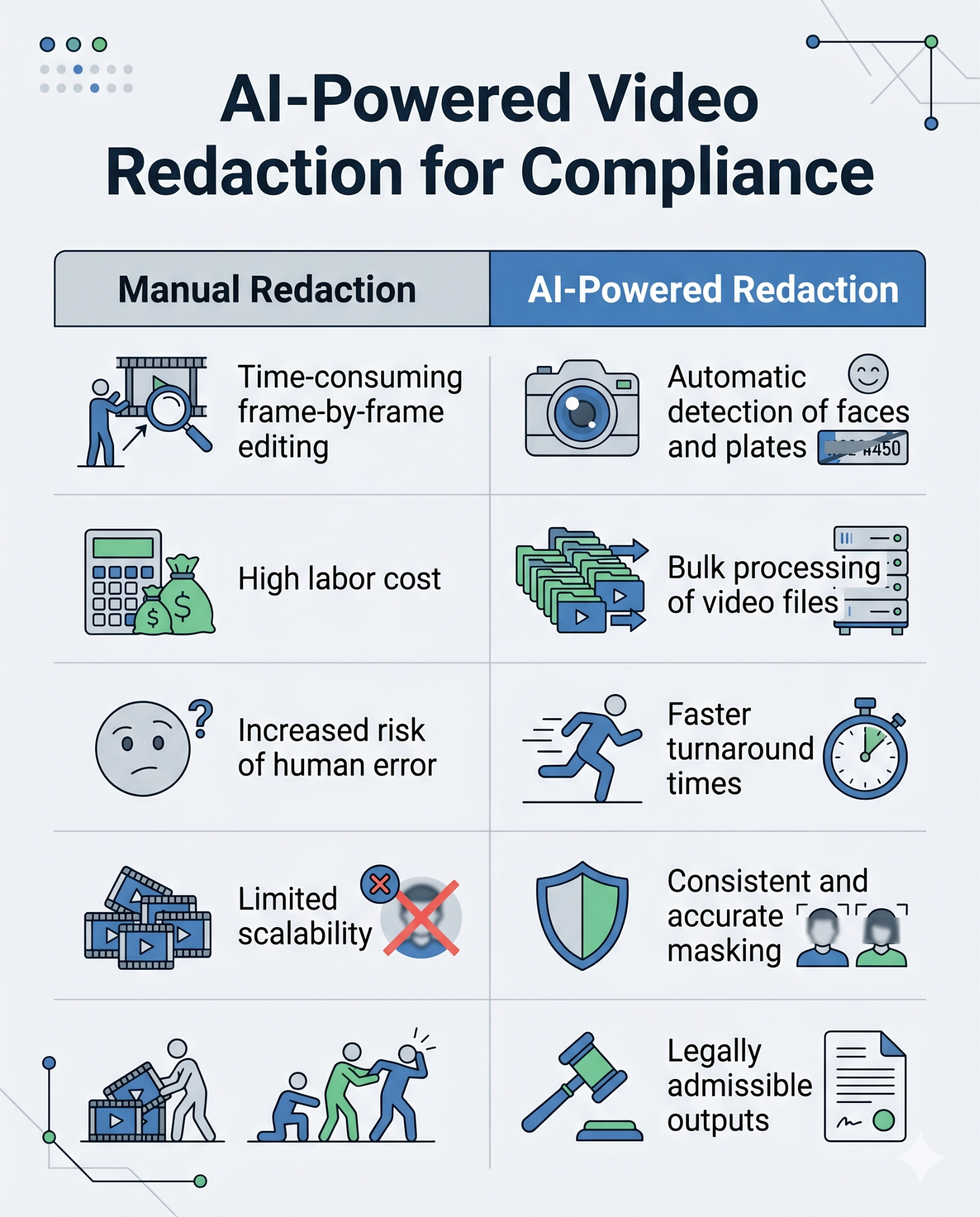
Finally, casinos must invest in technology and training. AI‑powered video redaction can automatically detect and blur faces, license plates, screens and ID badges, compressing hours of manual work into minutes. Modern systems can process thousands of files in bulk, integrate with ticketing or FOIA workflows and produce legally admissible redacted footage. Employee training ensures that surveillance staff understand privacy obligations, know when to zoom in (and when not to) and can operate redaction tools effectively.
How Sighthound Redactor helps
Sighthound Redactor is purpose‑built to meet the unique challenges of casino surveillance. It focuses on one problem: preparing video for safe use.
What it does:
- Detects heads, people, license plates, screens, IDs, and documents automatically
- Applies blur, pixelation, or fill automatically (as per choice)
- Tracks objects across frames
- Handles large volumes of footage in batches
What it does not do:
- It does not identify people
- It does not rely on cloud processing
- It does not require live streaming
It works on files.
That makes it practical for:
- Compliance workflows
- Legal requests
- Evidence preparation
- Internal reviews
Instead of spending hours editing manually, teams can process footage quickly and consistently.
The result is simple.
You keep the visibility you need, without exposing what you should not.
Watch a quick demo of Sighthound Redactor in action and see how teams handle sensitive footage without slowing down their workflow: https://www.redactor.com/demo-video
Try Sighthound Redactor for free or schedule a demo with our experts to see how automated video redaction can help your casino stay compliant while keeping operations efficient.
Related reading
- Understanding the complexities of GDPR & CCPA compliance in video surveillance – our in‑depth guide on how European and Californian privacy laws apply to cameras and what businesses must do to comply.
- AI‑powered redaction best practices – practical advice for implementing automated redaction workflows across video, audio and documents.
FAQs
Some jurisdictions require audio recording in detention rooms or club venues, while others prohibit it. For example, Nevada’s standards stipulate that the security office or detention room in a club venue must be monitored and recorded in both audio and video, with notices posted to inform detainees. Always consult local regulations.
It depends on the jurisdiction and the purpose. Nevada requires most gaming footage to be kept for at least seven days, with 30 days for detentions and 45 days for gaming salons. The Bank Secrecy Act extends retention of transaction and gaming records to five years. Privacy laws like GDPR and CCPA encourage deletion as soon as the footage is no longer needed.
It ensures a subject remains consistently redacted across every frame, even if they move or become partially obstructed. This prevents accidental privacy violations—like a face briefly unredacting—and eliminates flickering visual artifacts.
Under GDPR and CCPA, individuals can ask businesses for copies of personal data and request deletion or opt out of data collection. Casinos operating in these jurisdictions must implement workflows to locate footage featuring the requester and redact other individuals before release.
Published on: