
By:
Ali AhadLast Updated:
TL;DR
Drone footage can expose faces, license plates, private property, and bystanders. AI-assisted redaction helps organizations reduce privacy risks, stay compliant, and safely share aerial surveillance video.
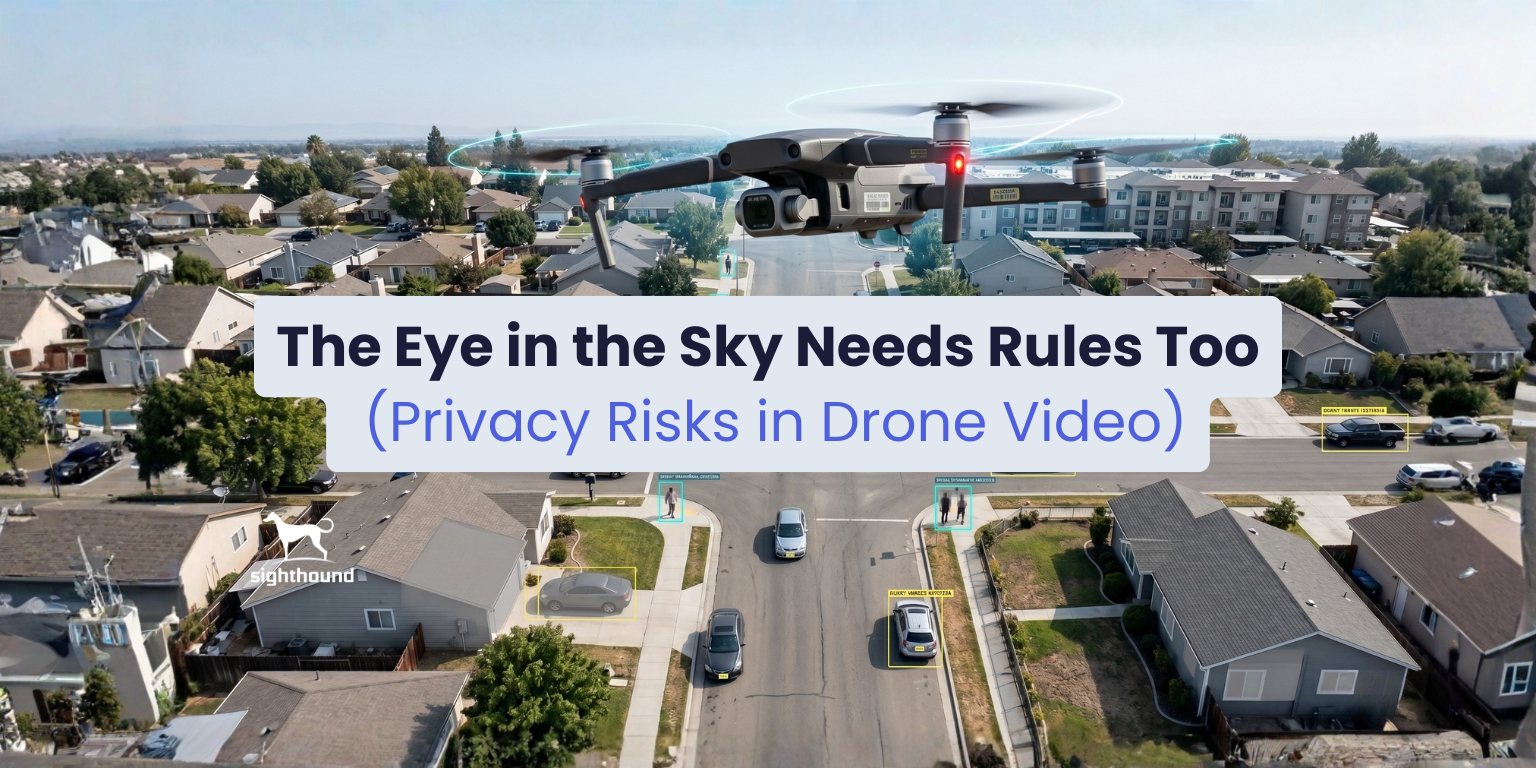
If your team uses drones for public safety, inspections, or emergency response, drone video privacy is no longer optional. A single flight can capture faces, license plates, private property details, and bystanders who are unrelated to your mission. Once footage is stored, shared, or disclosed, your organization takes on legal and reputational risk.
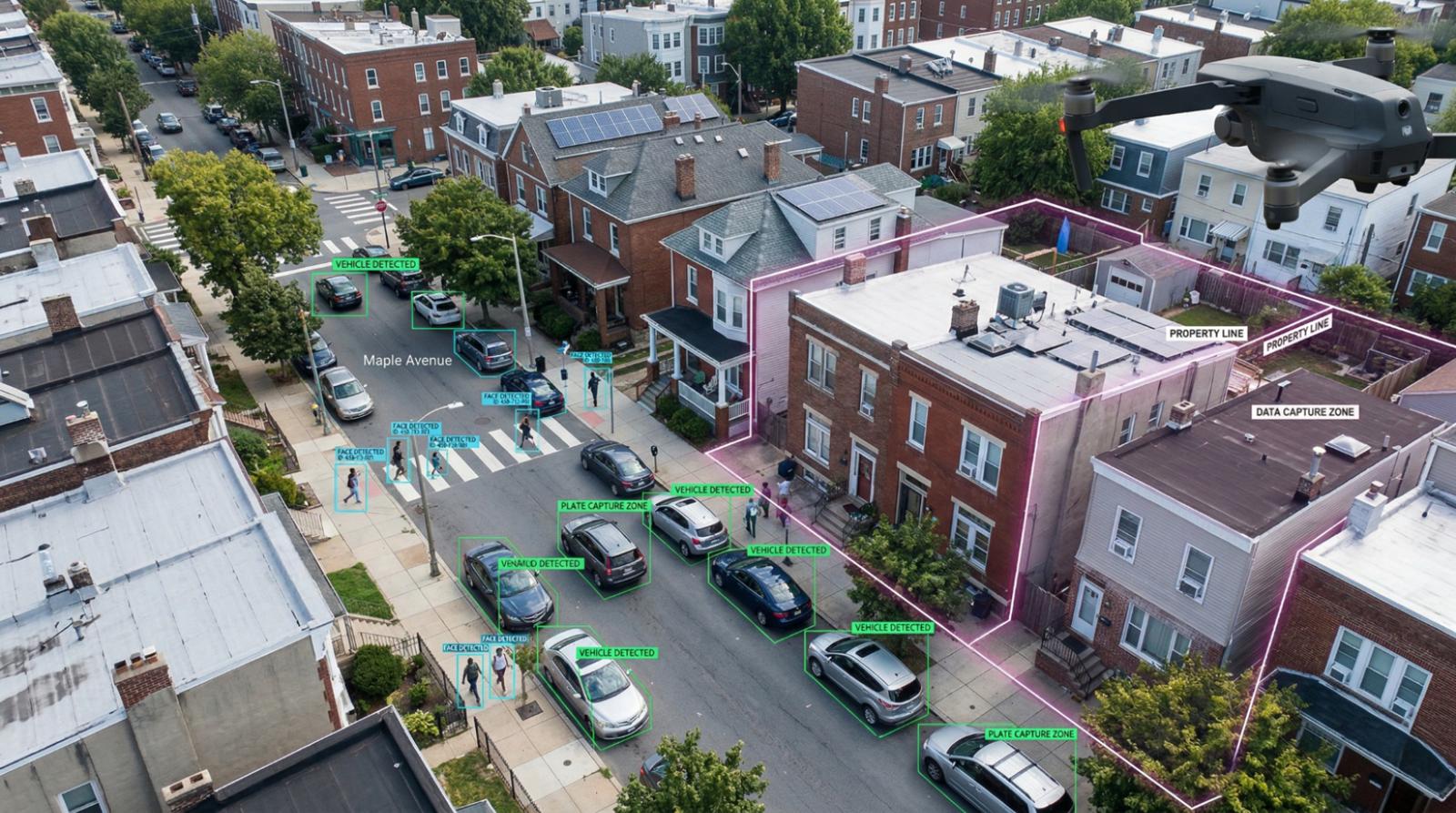
This guide explains the core drone surveillance privacy challenges, what current drone footage privacy laws require in practice, and how to build a repeatable workflow for drone video compliance. You’ll also see where redacting drone video fits into defensible disclosure operations.
Why Drone Surveillance Privacy Is a Growing Operational Risk
Drones are now standard in law enforcement, utilities, transportation, and disaster response because they deploy quickly and capture a broad context. But that same advantage creates privacy exposure:
- Wide-area collection captures people and spaces outside mission scope
- High-resolution sensors make incidental details identifiable
- Stored footage can be copied, requested, and redistributed
- Repeat flights can reveal patterns of movement over time
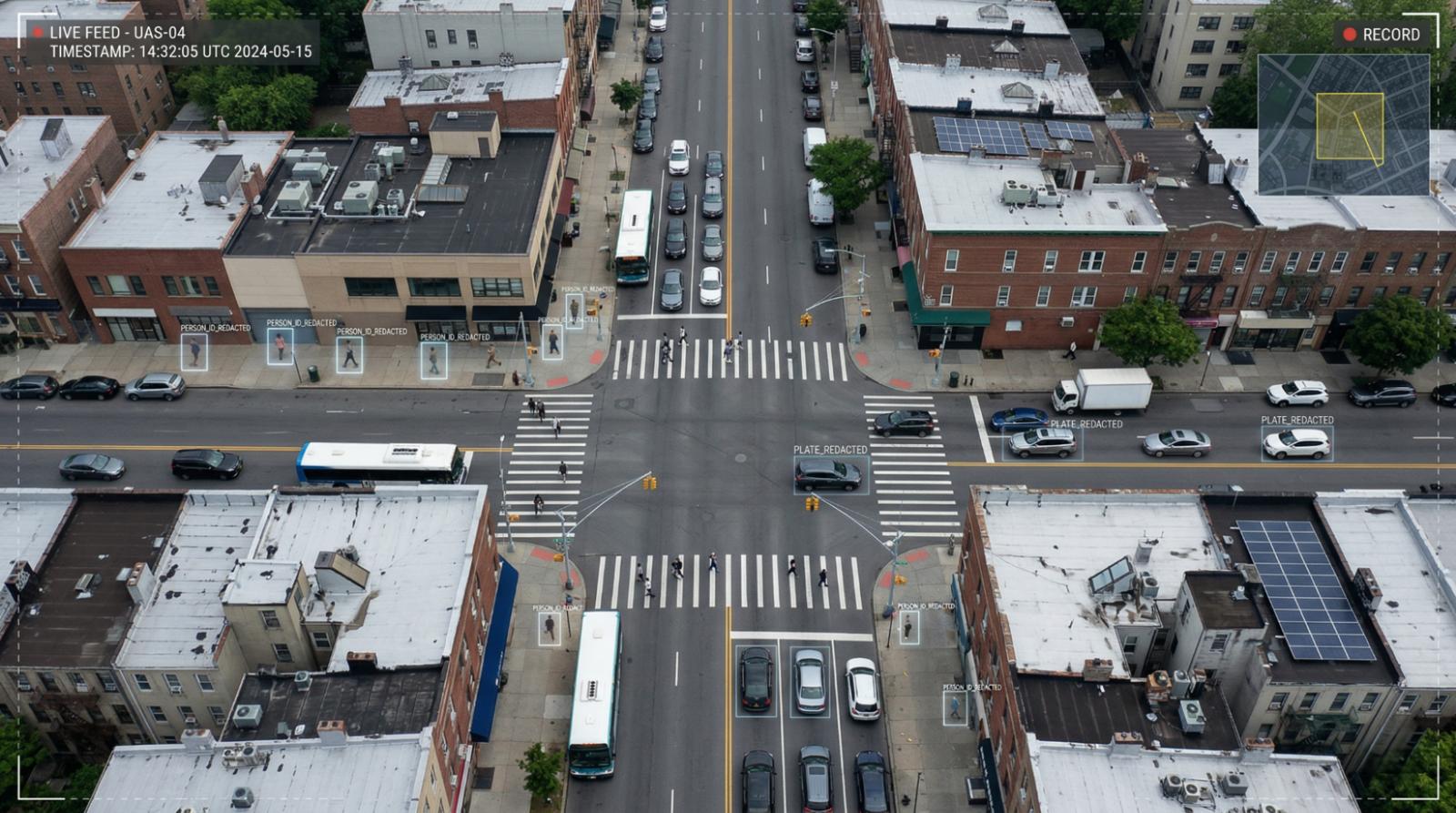
In short, aerial surveillance risks are structural, not edge cases. Even lawful collection can become a privacy problem during retention, review, or release.
What Makes Drone Video Privacy Different from Other Camera Programs
Drone footage carries a different risk profile than fixed CCTV or body-worn cameras.
1) Heighted Vantage Points Increase Incidental Capture
Drones can see over fences, into upper floors, and across neighboring properties. That perspective often collects people and places with no relation to the original mission.
2) High-Resolution Video Raises Re-Identification Risk
Footage that looks broad at first glance may still reveal identities through zoom, stabilization, or frame-by-frame review.
3) Risk Often Appears After Collection
The biggest failures usually happen downstream: oversharing, inconsistent review, weak access controls, and unredacted releases.
4) Metadata and Repeated Flights Can Reveal Patterns
Location, timestamps, and repeated routes can expose routines and associations when footage is analyzed over time.
Common Sensitive Data in Drone Footage
Teams often classify aerial footage as “environmental,” but privacy exposure is usually embedded in small details:
- Faces and identifiable individuals (including context clues tied to identity)
- License plates & vehicle identifiers
- Private property details (yards, windows, entrances, interior visibility)
- Bystanders in protests, accidents, disasters, or large events
- Vulnerable subjects such as minors, victims, and patients in distress
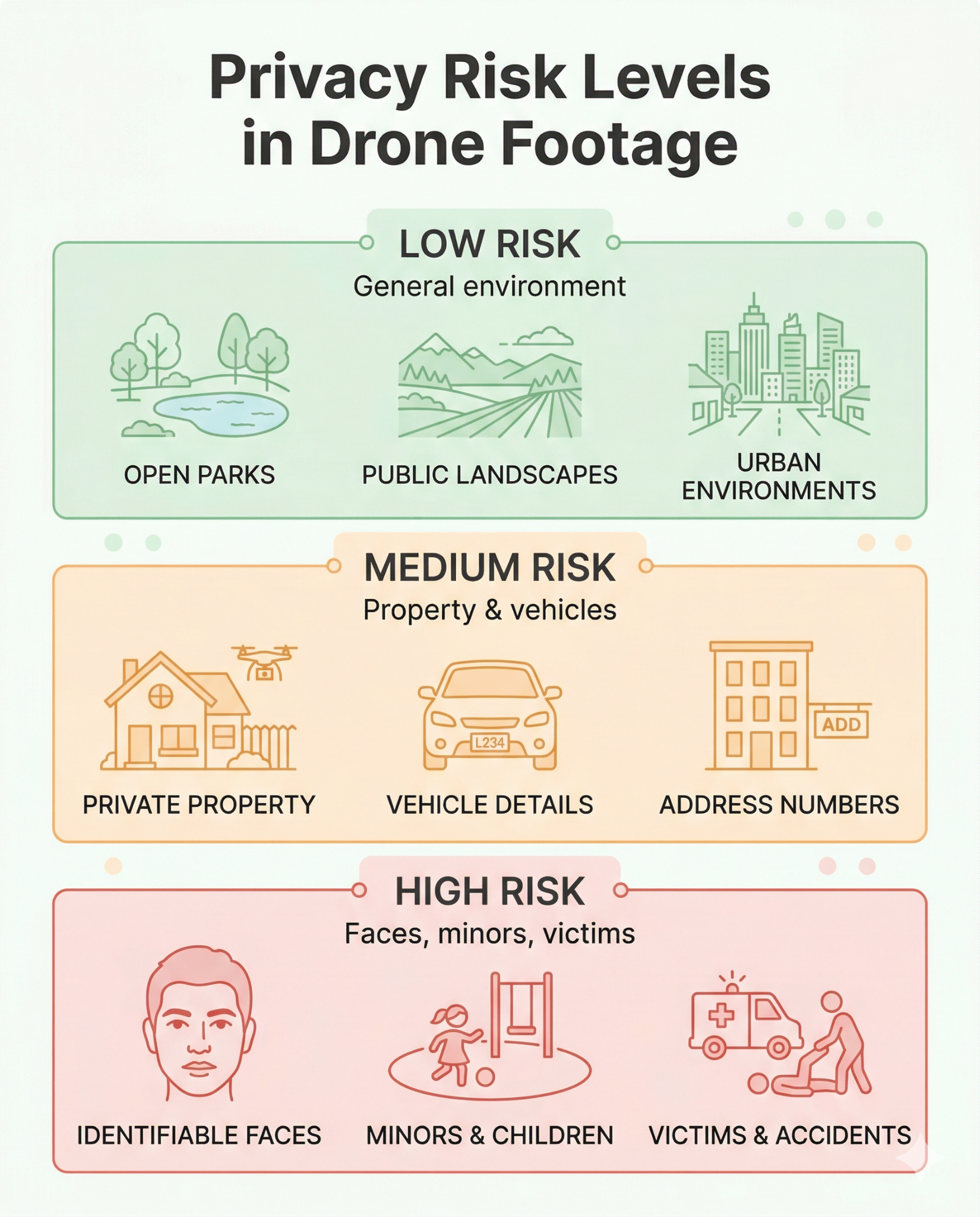
Treating these elements as expected data types, not rare exceptions, is critical for reliable compliance.
Drone Footage Privacy Laws: What Organizations Must Operationalize
Specific obligations vary by country, state, and sector, but most programs need controls across five domains:
- Purpose limitation and lawful authority for collection
- Data minimization and civil-liberties protections
- Retention schedules and records management
- Access controls and disclosure governance
- Public records and FOIA-style response procedures
A frequent mistake is assuming lawful flight automatically means lawful disclosure. In practice, the highest risk often appears during release workflows.
Public Records Requests and Drone Video Compliance
When drone files are subject to disclosure requests, teams face tight timelines and high-volume review. Without a standard process, organizations usually fail in one of two ways:
- Over-disclosure: sensitive data is released without appropriate protection
- Under-disclosure or delay: deadlines are missed, or responses become inconsistent
A defensible drone video compliance workflow should include:
- Request scoping and relevance review
- Defined redaction standards
- Secondary quality assurance
- Decision logging and release records
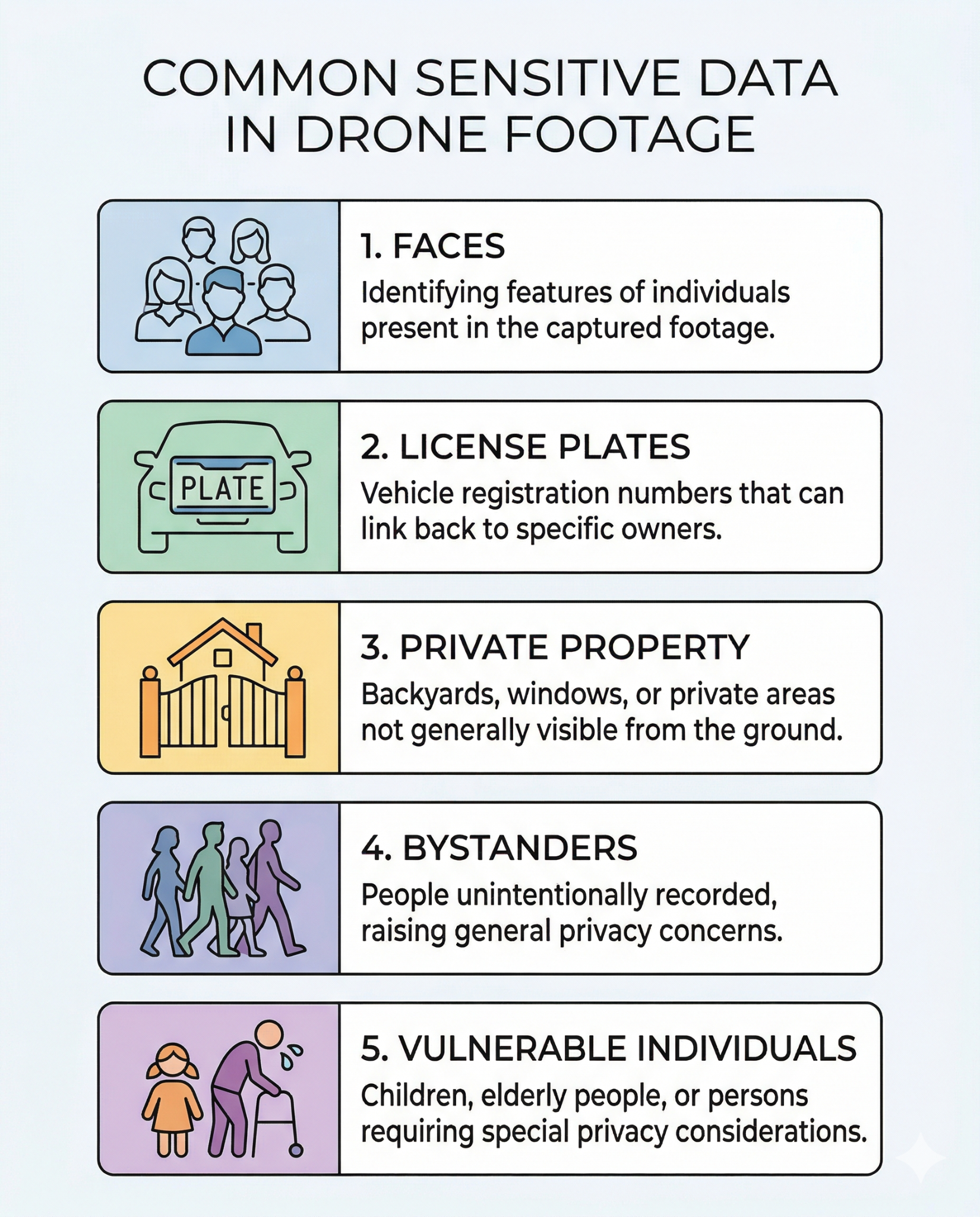
Redacting Drone Video Before Sharing or Release
For most organizations, redacting drone video is the control that makes transparency and privacy compatible.
Typical redaction targets:
- Heads
- License plates
- Uninvolved bystanders
- Private property details unrelated to mission purpose
To preserve legal defensibility, maintain:
- Original, unmodified source files
- Redacted derivatives with clear versioning
- Audit trails that document what was redacted and why
Why Manual Redaction Alone Breaks at Scale
Manual workflows can work for low volume, but they degrade quickly as usage grows.
Common failure points:
- Long recordings with many moving subjects
- Reviewer fatigue and inconsistent judgment
- Slow turnaround on recurring requests
- Limited traceability of edits and approvals
This is why many teams combine policy controls with software-assisted review.
Best Practices to Reduce Aerial Surveillance Risks
Use a lifecycle model instead of one-off decisions at release time:
- Before flight: define mission scope and minimization boundaries
- During storage: apply role-based access and retention controls
- Before sharing: enforce redaction standards and QA checkpoints
- After release: log rationale, maintain chain of custody, and audit outcomes
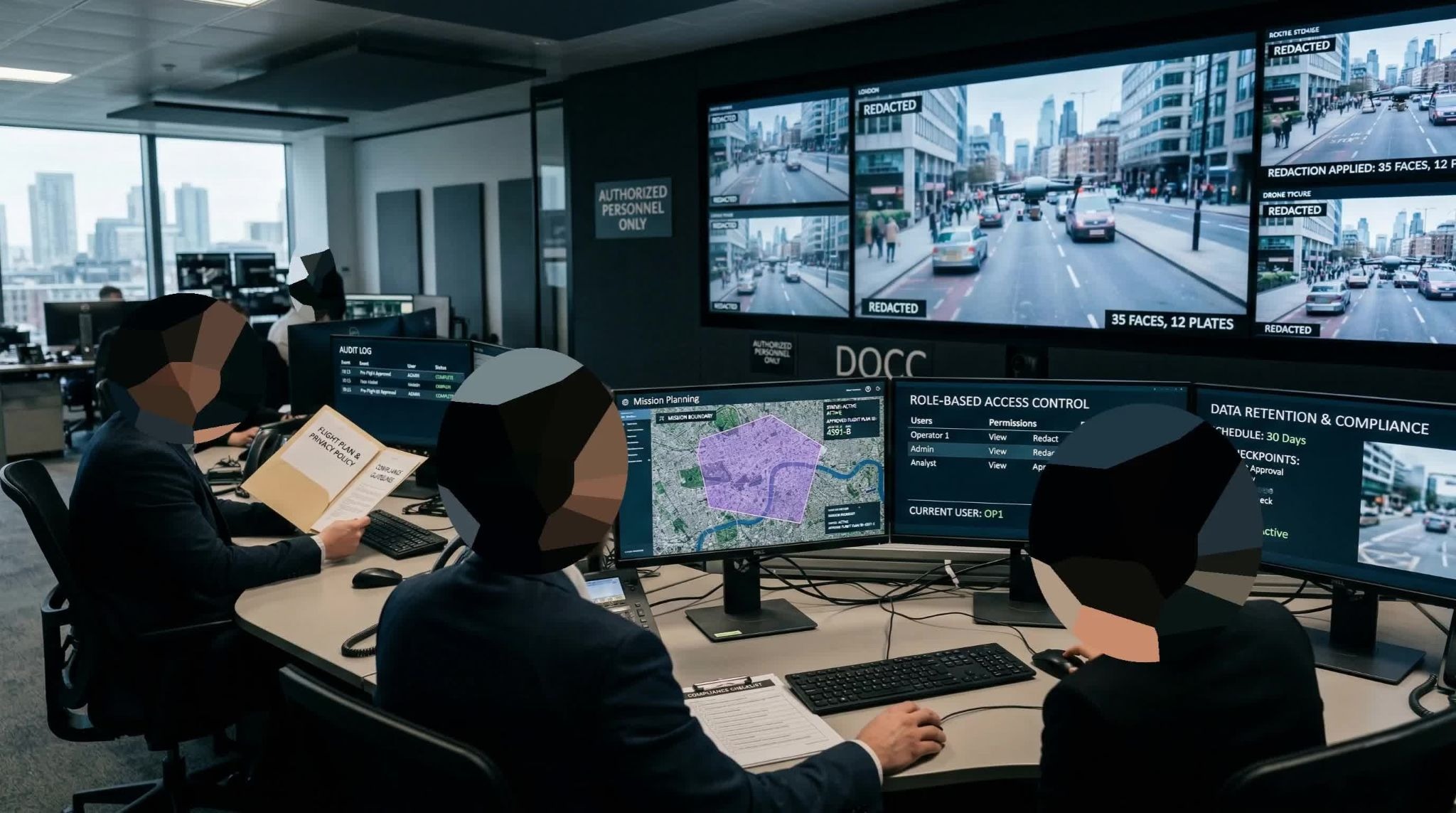
Training should be continuous for operators, reviewers, and approving authorities, especially as laws and local policy interpretations evolve.
Practical Role of Sighthound Redactor in Drone Privacy Workflows
Policy remains the foundation, but implementation quality depends on workflow consistency. In that context, tools such as Sighthound Redactor can support teams by helping with:
- Detect & redact of sensitive elements heads, license plates, people, vehicles, IDs, documents, and screens with precision (for faster first-pass review)
- More consistent redaction across files and reviewers
- Audit-ready logs that improve accountability during legal scrutiny
- Redact and transcribe in 8+ supported languages
- Upload, redact, and export large volumes of video or images at once
- Scramble, mute, or beep sensitive keywords in videos or audio
Used with legal guidance and human QA, this approach can reduce both operational burden and disclosure risk.
Conclusion
In 2026, drone video privacy is an operational governance issue, not just a legal checkbox. Programs that treat privacy as a full-lifecycle discipline are better positioned to meet disclosure obligations, protect public trust, and reduce avoidable liability.
The immediate next step, map your current workflow from collection to release, identify where sensitive data is most likely to leak, and formalize review and redaction standards before your next high-stakes request arrives.
Ready to Protect Your Data? Try Sighthound Redactor for Free.
Watch this quick demo of Redactor in action and learn how Redactor can enhance your privacy compliance efforts.
Next read: See how easy it is to redact with Sighthound Redactor by checking out the best practices for video redaction to support privacy and data compliance requirements, including HIPAA audio redaction.
For business opportunities, explore our Partner Program today.
FAQs
The main risks include capturing people without consent, collecting excessive footage, recording private property, storing video too long, and weak access controls that expose sensitive data.
It can be legal, but only when operators follow aviation rules and privacy laws, including a lawful basis for recording, transparency notices, and limits on where and how footage is captured.
GDPR applies when footage can identify people. Organizations must define a lawful basis, minimize data collection, set retention limits, protect data, and honor rights requests such as access or deletion.
Include purpose limitation, geofencing, privacy impact assessments, role-based access, encryption, retention/deletion schedules, incident response, and a documented audit trail.
Keep footage only as long as necessary for the stated purpose. Most organizations use short retention windows unless legal, safety, or investigative requirements justify longer storage.
Use pre-flight privacy checklists: define purpose, avoid sensitive zones, disable unnecessary audio, set camera angles to minimize bystander capture, and document legal/compliance approvals.
Published on: