
By:
Ali AhadLast Updated:
TL;DR
Hot to blur license plates in FOIA video the right way: balance transparency and privacy with AI-assisted detection, human review, audio checks, and audit-ready workflows to stay compliant and defensible.
For law enforcement agencies, public records officers, and city transparency teams, video disclosure has become one of the most challenging compliance tasks to implement. The legal standard is not simply “release footage” or “protect privacy.” In practice, agencies must do both at once, respond to lawful records requests while preventing unnecessary disclosure of personally identifiable information.
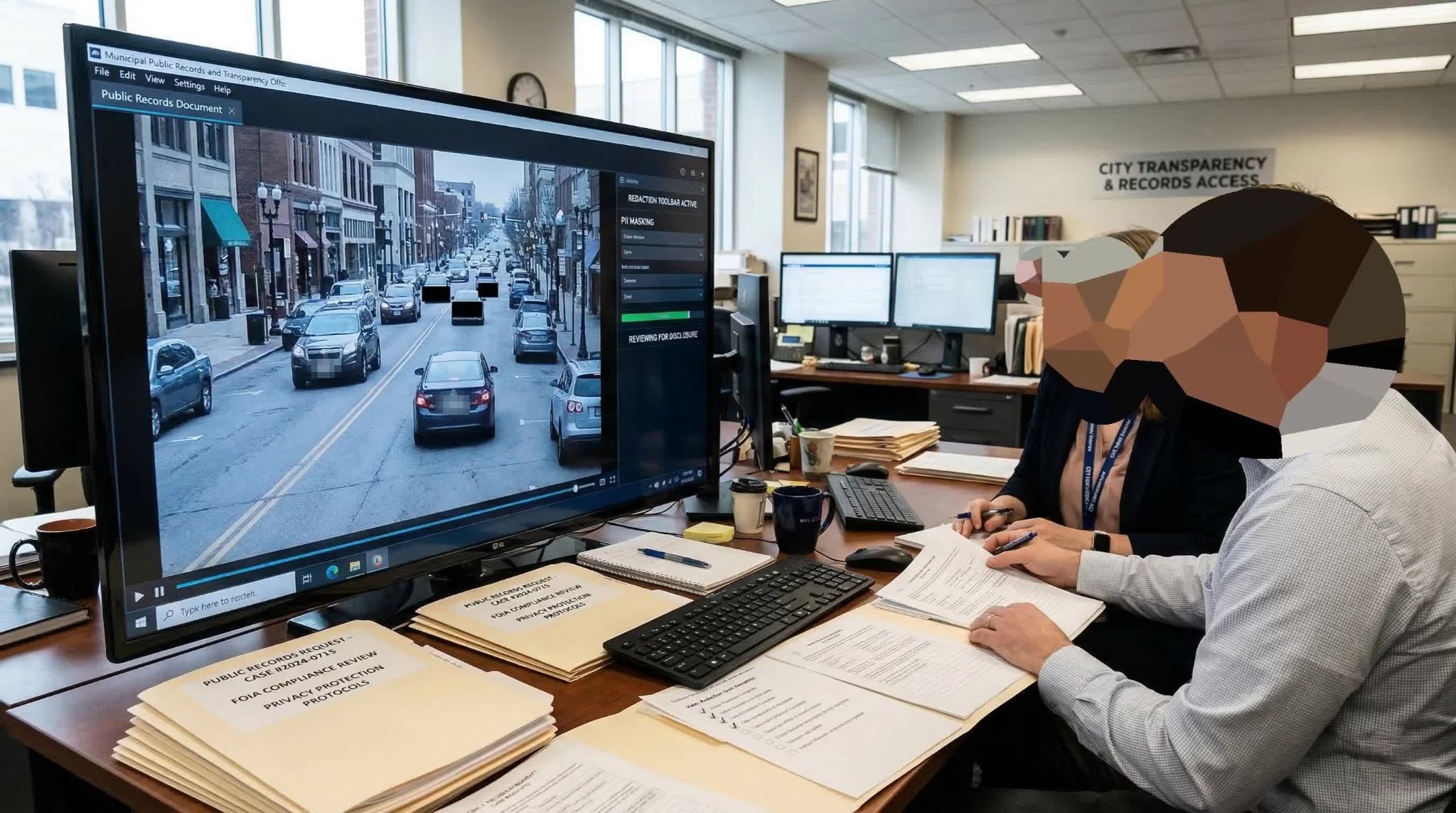
License plates sit at the center of that challenge. A plate number may appear ordinary in a single frame, but when paired with time, location, and vehicle context, it can become identifying information. That is why license plate redaction for FOIA compliance has moved from an optional editing step to a core public records control.
Why License Plate Redaction Is a Compliance Requirement
A license plate is a unique identifier tied to motor vehicle records. Even when the plate alone does not reveal a person’s name to the general public, it can still be used, combined, or cross-referenced in ways that expose identity, address, movement patterns, and associations. In modern records practice, that risk profile is enough to trigger a privacy review.
Multiple legal frameworks converge on the same obligation
FOIA and state public records laws generally favor disclosure, but they also include privacy protections. At the federal level, Exemption (b)(6) and Exemption (b)(7) are frequently cited when agencies redact personal information from records, especially in law-enforcement contexts. In parallel, the Driver’s Privacy Protection Act (DPPA) restricts disclosure of personal information from motor vehicle records.
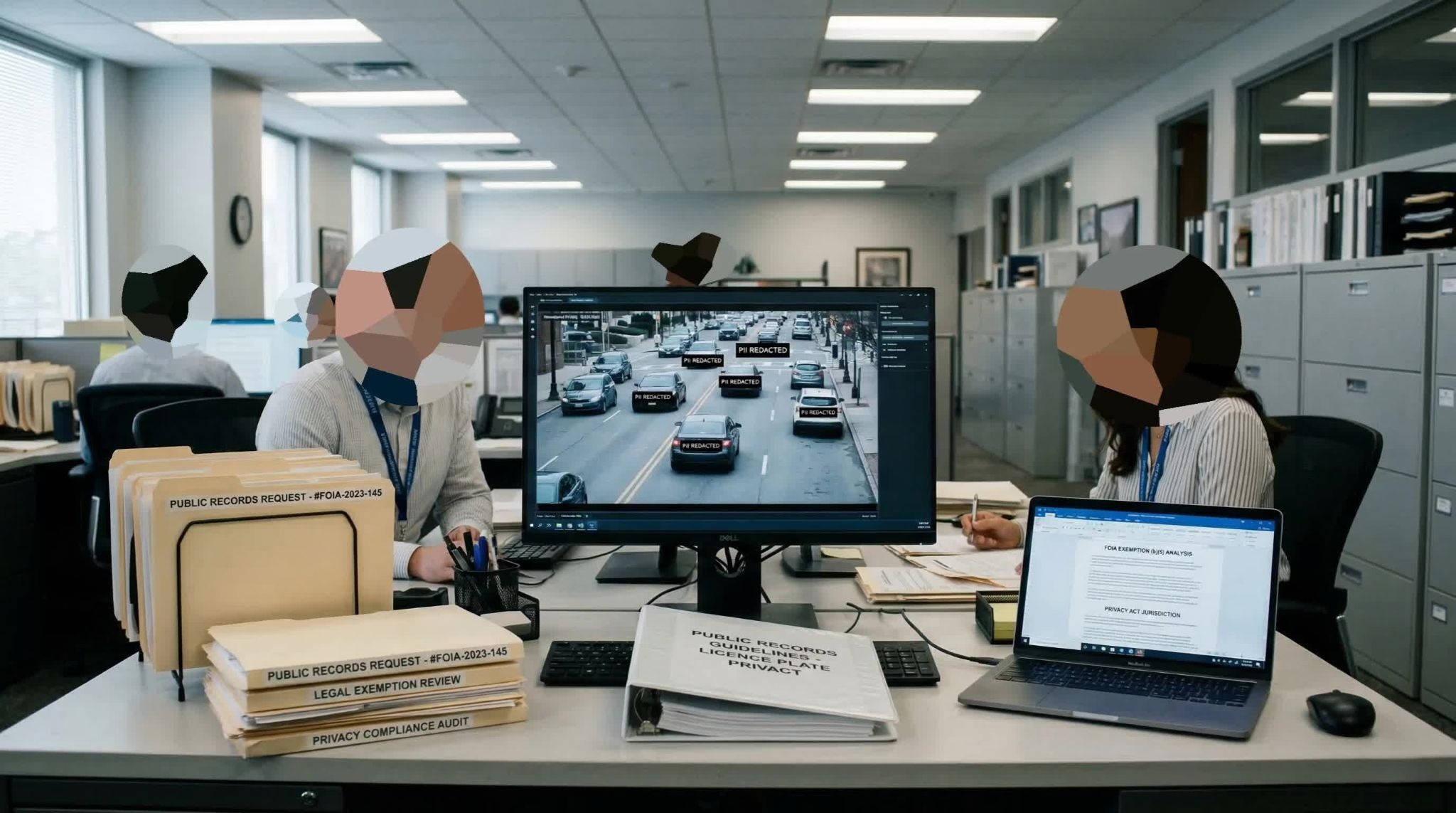
Redaction is usually expected instead of total withholding
Courts and records authorities have repeatedly emphasized that agencies should produce responsive records when possible, applying focused redactions rather than broad denials. For video, that means agencies need practical editing workflows that can isolate exempt information while preserving releasable content.
FOIA Disclosure Risks Agencies Must Manage
Many agencies operate under strict response windows for public records requests, and body-worn camera release laws can impose additional timing constraints. When teams rely on fully manual editing, the backlog grows quickly. Missed deadlines may lead to statutory violations, court intervention, or settlement pressure.
Over-redaction can be just as problematic
Compliance is not “blur everything.” Excessive redaction that obscures non-exempt material can prompt appeals, accusations of transparency avoidance, and additional review cycles. FOIA officers have to balance privacy and public access at a granular level, which is why policy alignment between legal and operations teams is critical.
Privacy Risks of Leaving License Plates Unredacted
Plate numbers and addresses are often spoken aloud during stops, dispatch traffic, or officer narration. A workflow that redacts video but leaves audio untouched can still result in disclosure of sensitive information. For FOIA compliance, both channels should be reviewed together.
Why Frame-by-Frame Redaction Is So Difficult
Field video introduces motion blur, abrupt camera movement, weather interference, occlusion, glare, and low-light conditions. A plate may be partially visible for only fractions of a second, then reappear in another angle. That makes frame-by-frame consistency difficult, especially when request volume is high.
Partial visibility still creates disclosure risk
Teams sometimes underestimate what can be reconstructed from fragmented frames. A plate obscured in one frame may be readable across a short sequence. Reviewers must evaluate continuity, not just isolated snapshots.
Manual-only workflows do not scale
A single incident can generate dozens of hours of footage. Frame-by-frame manual editing may be feasible for small batches, but it becomes a bottleneck under statutory deadlines. This is where automated detection and tracking tools are increasingly used to reduce first-pass workload while preserving human review for edge cases.
Common redaction mistakes to avoid
- Overwriting original files: This compromises evidence integrity and creates chain-of-custody problems.
- Inconsistent reviewer decisions: Without written standards, identical scenarios may be treated differently by different technicians.
- Missed single-frame exposures: One unredacted frame can still constitute a privacy failure.
- Ignoring audio redaction: Spoken plate numbers can defeat otherwise thorough visual redaction.
- Over-redacting non-exempt content: This increases appeals and can undermine transparency goals.
Practical Examples From Agency Workflows
Example 1: Body camera footage from a traffic stop
A records unit receives a request for body camera video tied to a complaint. The footage contains the subject vehicle, parked cars, and passing traffic. The team applies legal scoping first, then runs automated plate detection to identify likely plate instances. Reviewers validate detections, correct misses, and confirm that spoken identifiers in audio are also redacted before release.
Example 2: City intersection footage requested after a public incident
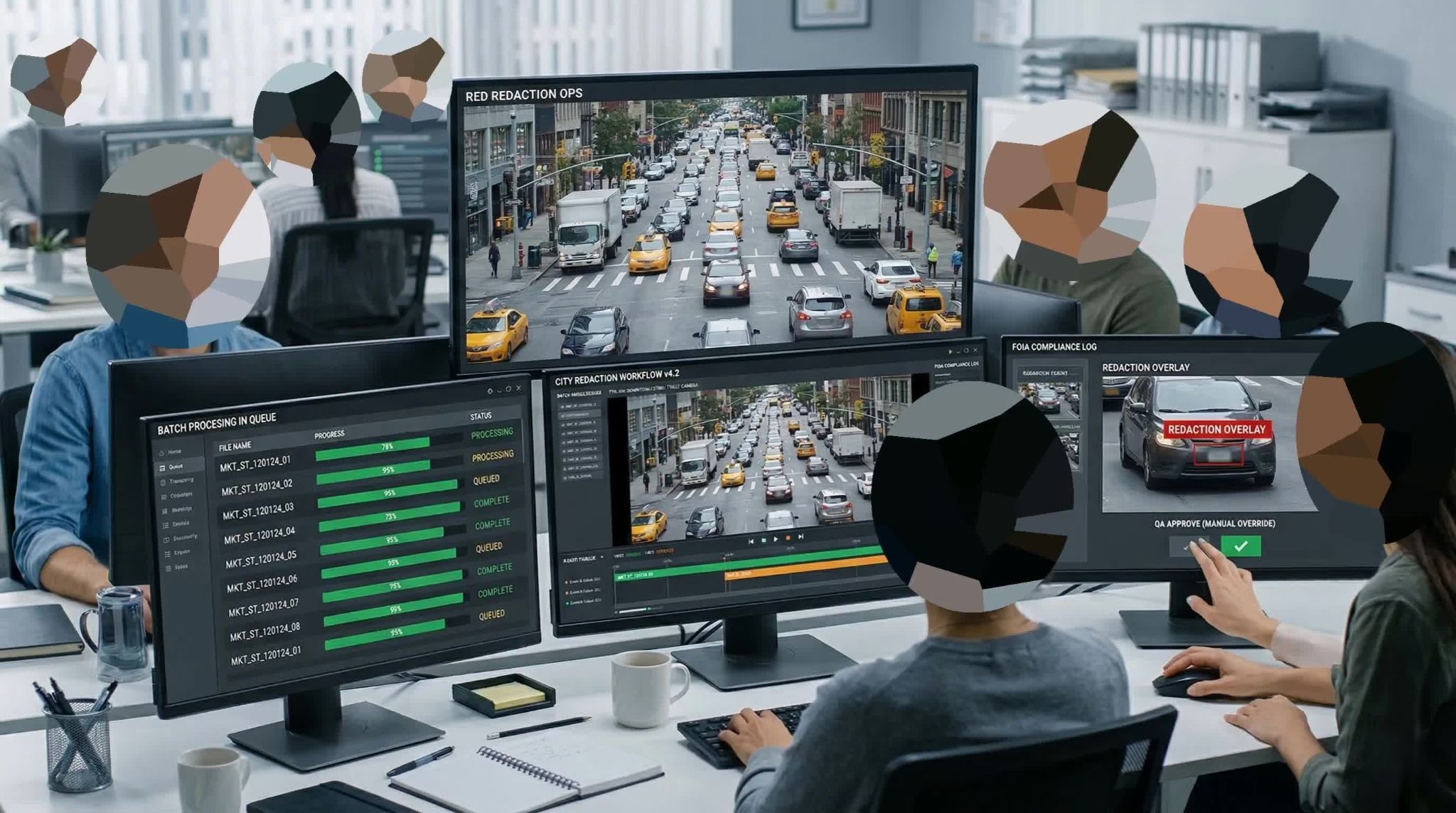
A city transparency office receives requests for traffic camera footage at a downtown intersection. The challenge is volume , thousands of vehicles appear over a short period. The team uses batch processing to queue files, applies consistent plate-redaction rules, and then performs sample-based quality assurance before export.
Building a Defensible FOIA Video Redaction Workflow
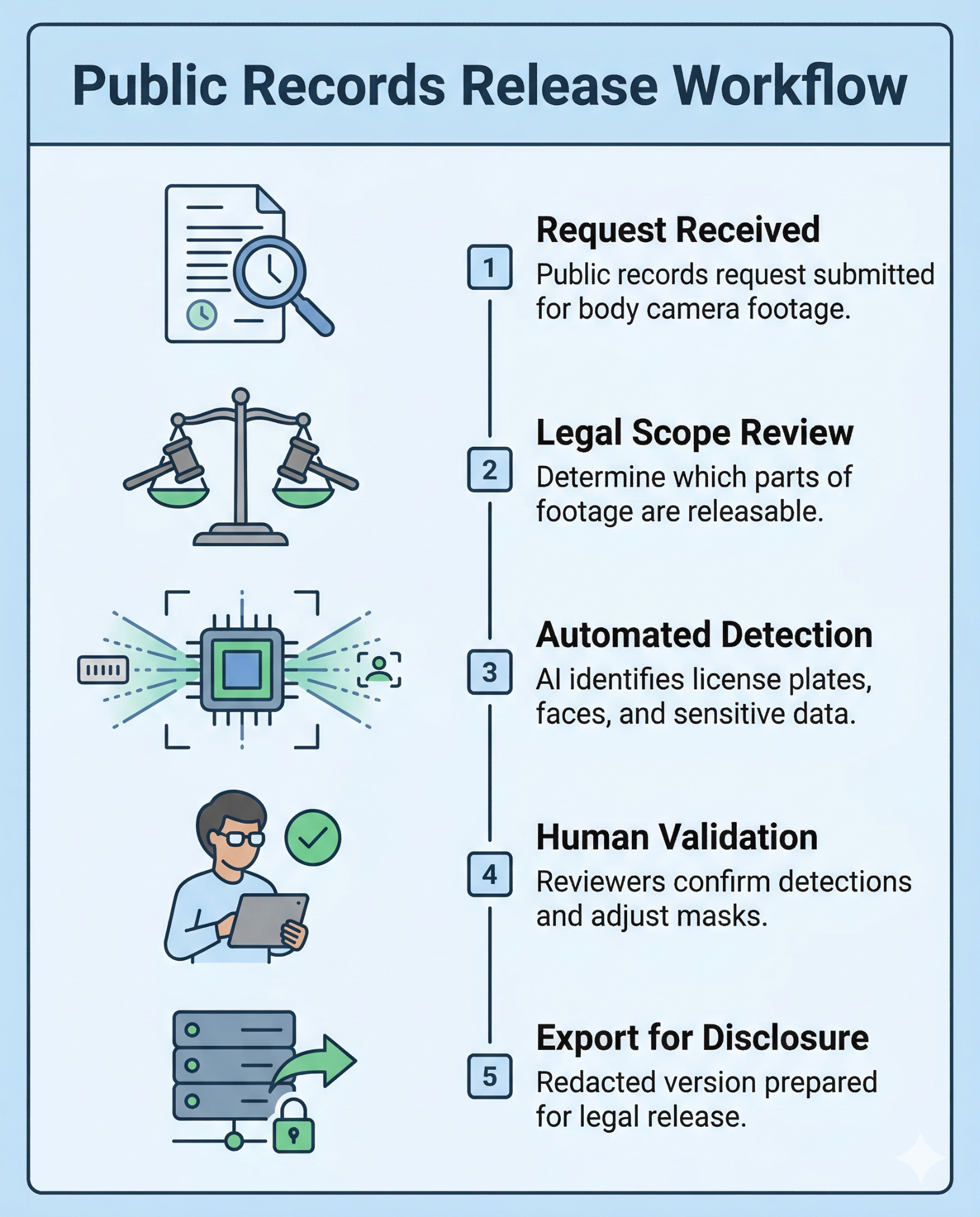
1) Intake and legal scoping
Begin with request classification, governing jurisdiction, and applicable exemptions. Define what must be redacted and what should remain visible. This step should involve public records officers and legal counsel for edge cases.
2) Detection and first-pass redaction
Run automated detection for license plates and related identifiers. Tools like Sighthound Redactor can support this stage by identifying and tracking plate instances across frames, reducing the risk of manual omission in dynamic footage.
3) Human review and exception handling
Automation should not be the final decision-maker. Reviewers validate detections, handle false positives/negatives, and resolve difficult scenes (occlusion, glare, low light, unusual plate design). This is where agency policy and reviewer training matter most.
4) Audio and multimodal checks
Review spoken content, radio chatter, and contextual metadata for sensitive identifiers. A redaction workflow should treat audio, video, and associated records as one disclosure package.
5) Export and records retention
Produce redacted exports separately from source evidence. Retain supporting logs, reviewer notes, and release metadata according to agency retention policy.
Maintaining Chain of Custody During Redaction
Chain of custody is often discussed in criminal evidence contexts, but it is equally relevant to public-records video handling. When a disclosure decision is contested, agencies must demonstrate that source media remained intact and handling steps were controlled.
Key controls include:
- Preserving unredacted originals in protected storage.
- Limiting and logging access to source and working files.
- Ensuring redactions are applied to derivative copies, not originals.
- Recording every review, edit, and export event with user identity and timestamp.
Documenting Redaction Actions for Compliance and Legal Defense
When agencies face appeals or litigation, “we redacted for privacy” is not enough. Review bodies typically ask for process detail and legal basis.
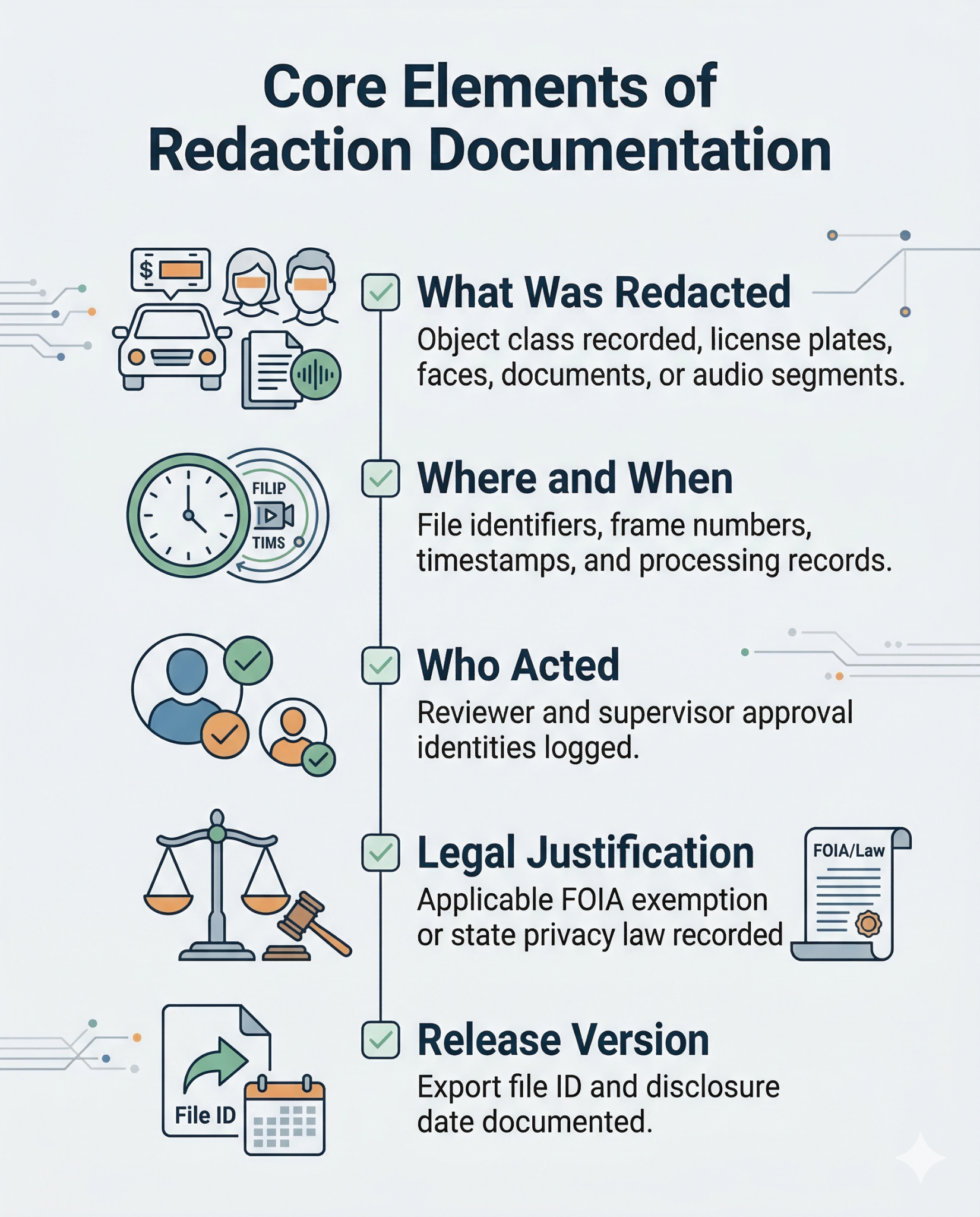
At a minimum, documentation should capture:
- What was redacted: object class (plate, face, vechile, audio segment).
- Where and when: file identifiers, frame/time ranges, action timestamps.
- Who acted: reviewer and approver identity.
- Why it was redacted: applicable FOIA exemption or state-law authority.
- What was released: export version and release date.
Best Practices for Law Enforcement, Records, and Compliance Teams
- AI-Powered Detection: Instantly detects faces, heads, license plates, whole bodies, vehicles, and more, no frame-by-frame review needed.
- Audio Redaction with Transcription: automatically mutes names, locations, or keywords in recorded audio. Generates searchable transcripts to accelerate case review.
- Bulk Redaction: Redact multiple files in a single workflow, fast and reliably. Supports batch import, presets, and multi-export.
- Smart Annotations & Presets: Apply custom blur levels, redact specific zones, or set case-specific rules, all with easy-to-use presets.
- Flexible Deployment Options: Deploy Redactor on secure local servers, in GDPR, CCPA, FIOA-compliant cloud environments, or directly on edge devices based on your agency's needs.
Conclusion
Blurring license plates in released footage is not a cosmetic edit. It is a core control that sits at the intersection of FOIA disclosure requirements, privacy law, and evidence handling discipline. Agencies that rely on ad hoc editing or undocumented decisions face avoidable legal and operational risk.
For public records and compliance teams, the objective is straightforward: release what the law requires, protect what the law protects, and be able to prove how each decision was made.
Want to learn more about AI-powered redaction & FOIA compliance?Try Sighthound Redactor today.
Want more insights? Read our AI-powered redaction best practices.Need a live demo? Schedule a Redactor demo now.
Published on: